How ERP and CRM Work Together to Drive Business Growth
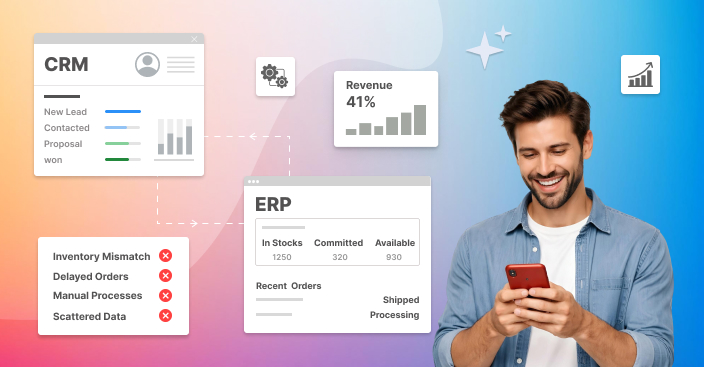
Table of Contents
Running a business in Australia today means managing operations, customers, and constant change simultaneously.
As companies grow, many reach a point where disconnected systems, manual processes, and scattered data begin to slow them down rather than support progress.
That’s where ERP and CRM integration services start to make a meaningful impact.
ERP systems handle the core of your business, finances, inventory, and operations, while CRM focuses on customer relationships, sales, and communication.
When these systems are aligned, businesses gain better visibility, faster processes, and stronger control over day-to-day activities. Instead of switching between tools or chasing information, everything works within a centralised system.
At Magneto IT Solutions, businesses are shifting away from disconnected platforms and moving towards integrated systems that simplify operations and support long-term growth rather than adding complexity.
In this blog, we’ll explore how ERP and CRM work together to support scalable business growth.

Understanding ERP and CRM in Simple Terms
ERP and CRM are often spoken about together, but they solve very different problems.
ERP keeps your operations in check. It helps manage finances, inventory, procurement, and supply chains. It’s the system your operations team relies on every day to keep things running smoothly.
CRM, on the other hand, is all about your customers, tracking conversations, managing sales pipelines, and helping your team stay on top of leads and relationships. In fact, it’s been found to boost sales revenue by up to 41%, making it a powerful driver of growth.
When these systems are not connected, teams operate with incomplete information. But when they’re aligned, decisions become faster and far more accurate.
Why Integration Matters More Than Ever
Businesses today can’t afford delays caused by disconnected data. Customers expect quick responses, accurate timelines, and smooth experiences.
When ERP and CRM are integrated:
- Sales teams know what’s actually available
- Operations teams understand customer demand
- Finance teams get real-time visibility
Working with an experienced ERP and CRM integration solutions provider helps remove these disconnects and brings everyone onto the same page. It’s not just about technology; it’s about making your teams work better together.
Key Benefits of ERP and CRM Integration
When ERP and CRM systems work together, the impact goes beyond just connecting data; it transforms how your business operates.
- Improved data accuracy by reducing duplication and manual errors
- Faster execution with access to real-time information
- Better customer experience through personalised and consistent interactions
- Stronger collaboration by keeping teams aligned across departments
- Scalable processes that support growth without constant rework
This helps businesses move from reactive decision-making to a more proactive and structured approach.
How ERP and CRM Work Together in Practice
To understand the real value of integration, consider how ERP and CRM work together in everyday business scenarios.
Think about a simple order journey.
A customer places an order. The CRM captures the details, including preferences and communication history. That information is instantly shared with the ERP system, which checks stock availability, processes the order, and updates delivery timelines.
At the same time, the CRM is updated with order status, so sales and support teams always have the latest information when speaking with the customer.
There’s no back-and-forth between teams. No manual data entry. No confusion.
For your team, this means:
- Faster order processing
- Fewer errors
- Better customer communication
For your customers, it simply feels like your business is easy to deal with—quick, reliable, and consistent at every step.
The Impact on Daily Operations
Once ERP and CRM are integrated, the impact becomes visible in the way your teams work every single day. Processes that once required constant follow-ups, manual updates, or cross-checking now run more smoothly and efficiently.
Your sales team no longer needs to double-check inventory or rely on another department for updates before committing to a customer.
At the same time, your support team can access complete customer and order information without switching between multiple systems. Leadership teams also benefit from real-time insights rather than relying on delayed or outdated reports.
With everything aligned, information flows seamlessly across departments. This creates a more aligned way of working, where decisions are based on accurate and up-to-date data rather than assumptions.
This level of visibility helps businesses respond faster to customer needs, plan operations more effectively, and avoid unnecessary delays. Over time, it not only improves efficiency but also reduces costs and strengthens overall business performance.
What to Expect from ERP and CRM Implementation Services
Getting integration right requires more than just connecting two systems. It needs planning, clarity, and the right approach.
With professional ERP & CRM implementation services, the process usually begins with analysing existing workflows, identifying inefficiencies, and defining clear integration goals. Depending on complexity, implementation can take anywhere from a few weeks to several months.
From there, a structured plan is created to ensure systems are aligned without disrupting ongoing operations.
A reliable ERP and CRM implementation company focuses not just on setup, but also on long-term usability. That means your team can adopt the system easily and start seeing value quickly.

Why Custom Integration Works Better
Every business operates differently. What works for a retail brand may not align with the needs of a manufacturer or an eCommerce business, each with its own unique processes and priorities.
That’s why custom ERP integration services is often the better choice. It allows systems to be designed around your workflows instead of forcing your team to adapt to rigid structures. This makes the system more practical, easier to adopt, and better suited to your day-to-day operations.
Customisation can include:
- Tailored dashboards for different teams
- Automated workflows based on your processes
- Integration with existing tools you already use
This approach keeps operations streamlined while giving your business the flexibility to scale without unnecessary complexity.
Navigating ERP CRM Integration Challenges
Integration isn’t without its challenges, but most of them can be managed with the right support.
One common issue is data inconsistency. When systems store data differently, aligning them can take time. Proper planning and data cleanup solve most of this early on.
Another challenge is internal resistance. Teams may be comfortable with existing systems and hesitant to change. Clear communication and hands-on training make a big difference here.
Cost is also something businesses consider carefully. However, the long-term efficiency gains often outweigh the initial investment.
Why Hiring an ERP and CRM Consultant is Necessary
Integration projects can quickly become complex without the right expertise. When you hire ERP CRM consultants, you bring in people who have done this before and know what to avoid.
They help you:
- Identify what actually needs integration
- Avoid unnecessary complexity
- Build a system that supports your goals
More importantly, they ensure your integration works in the real world, not just on paper.
Where Integration is Heading Next
Technology is evolving rapidly, and ERP and CRM integration is becoming more intelligent and adaptable. It’s no longer just about connecting systems, it’s about creating a smarter, more responsive business environment.
More businesses are moving towards cloud-based solutions, making it easier for teams to access systems from anywhere while maintaining real-time visibility. This shift is helping organisations stay agile and respond faster to changing demands.
At the same time, real-time data is becoming a standard expectation rather than a luxury. Leaders can now make quicker, more informed decisions based on live insights instead of relying on delayed reports.
Artificial intelligence is also starting to play a bigger role, helping businesses predict customer behaviour, automate repetitive tasks, and uncover opportunities that might otherwise go unnoticed.
Together, these advancements point to a clear shift—integration is no longer just about improving efficiency, it has become a key driver of competitiveness and long-term growth.
The Growing Demand in Australia
Australian businesses are rapidly moving towards more connected and efficient systems as digital transformation becomes a priority.
With increasing competition and rising customer expectations, organisations are no longer relying on disconnected tools; they’re investing in solutions that bring operations and customer data together.
This shift is backed by strong market growth. The Australian ERP software market was valued at around USD 930 million in 2024 and is projected to cross USD 1.19 billion by 2030, showing steady adoption across industries.
It highlights a clear shift: businesses now see ERP and CRM not as optional tools but as essential systems for driving growth, improving visibility, and enabling informed decision-making.
As a result, more organisations are investing in ERP and CRM implementation services to modernise operations, improve collaboration, and stay competitive in a fast-changing environment.
It’s no longer about adding more tools. It’s about building a connected ecosystem where everything works together to support efficiency, agility, and long-term growth.
Conclusion
ERP and CRM integration brings clarity to how your business operates. It connects teams, eliminates inefficiencies, and creates a smoother customer experience.
With the right approach and the support of a trusted partner, businesses can move from disconnected systems to a more structured and scalable way of working.
If you’re planning to improve efficiency and build a stronger foundation for growth, now is the time to explore integration.
Partner with a digital commerce expert to streamline your operations and build a scalable, future-ready business.
FAQs
 What is ERP and CRM integration, and why is it important?
ERP CRM integration connects your operational and customer management systems, allowing data to flow seamlessly across teams. It removes data silos, improves efficiency, and supports better decision-making.
How does ERP & CRM integration benefit businesses?
It helps reduce manual work, improve accuracy, and provide better visibility into operations and customer data, making it easier to scale efficiently.
How long does ERP and CRM implementation typically take?
Timelines vary depending on complexity. Basic integrations may take a few weeks, while customised solutions can take several months.
Do I need a custom ERP and CRM integration or a standard solution?
If your workflows are unique, a custom integration is usually the better option as it aligns the system with your business processes.
How do I choose the right ERP and CRM integration partner?
Choose a partner with relevant experience, strong technical skills, and a clear understanding of your business goals, along with ongoing support capabilities.