How to Increase AOV in Automotive eCommerce with Bundling, Fitment, and AI Recommendations
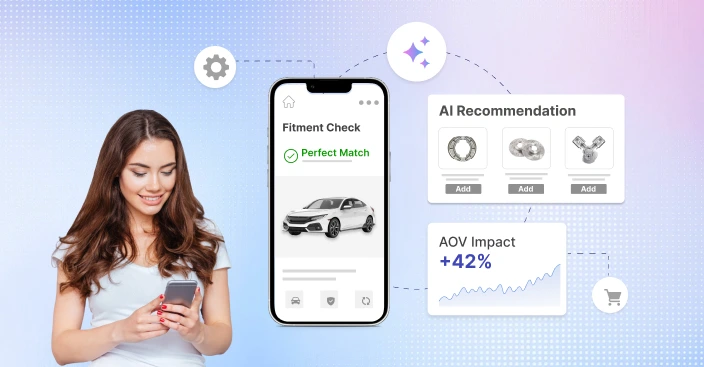
Table of Contents
The Australian automotive eCommerce market is becoming increasingly competitive, and many brands are struggling to maximise revenue from every customer interaction.
Rising acquisition costs, intense marketplace competition, poor product discovery, and fitment uncertainty often result in low basket sizes and missed revenue opportunities.
Many automotive businesses are successfully driving traffic but failing to increase Average Order Value (AOV), which directly impacts profitability and long-term growth.
To solve this, leading automotive brands are investing in intelligent bundling, fitment intelligence, AI-powered recommendations, and conversion-focused commerce ecosystems designed to maximise revenue from every customer interaction.
In this blog, you will explore how these strategies help automotive eCommerce businesses in Australia increase AOV, improve conversions, and create more profitable customer journeys.
Why AOV Matters More Than Ever in Automotive eCommerce
Customer acquisition in automotive commerce is becoming more expensive every year. Whether brands rely on SEO, Google Shopping campaigns, marketplaces, or paid advertising, attracting qualified traffic now requires higher investment. As a result, many businesses are turning to automotive ecommerce solutions to improve conversion rates, maximise revenue from existing traffic, and achieve sustainable growth without continuously increasing marketing spend.
The problem is that many automotive websites still generate low-value transactions despite increasing traffic costs.
Every low basket-size transaction increases acquisition pressure, limits profitability, and reduces the overall return on marketing investment.
Increasing AOV helps automotive businesses:
- Improve revenue per customer
- Maximise acquisition ROI
- Reduce dependency on discounts
- Improve inventory movement
- Increase customer retention
- Drive more profitable growth
For Australian automotive retailers dealing with rising operational costs and increasing competition, improving AOV is no longer optional. It has become a critical growth strategy.
The Hidden Barriers Preventing Higher AOV
Most automotive buyers visit an online store with a specific purchase goal in mind. They search for tyres, brake pads, engine oil, filters, or replacement parts, verify compatibility, compare pricing, and proceed directly to checkout.
The challenge is that many automotive websites are designed only to complete that single transaction rather than expand the buying journey.
This creates smaller basket sizes and lost cross-selling opportunities.
Some of the biggest barriers include:
- Poor product discovery
- Confusing fitment experiences
- Generic recommendations
- Weak bundling strategies
- Cluttered navigation
- Limited personalisation
Even small moments of uncertainty can reduce purchase confidence. If customers are unsure about compatibility or product relevance, they avoid adding more products to the cart.
Without accurate fitment and intelligent merchandising, automotive brands struggle to convert traffic into profitable revenue, leading to missed sales opportunities and lower customer lifetime value.
Smart Product Bundling That Increases Basket Size
Product bundling is one of the most effective strategies for increasing AOV in automotive eCommerce because most automotive purchases are connected to maintenance needs, upgrades, accessories, or installation requirements.
The key is not simply grouping products. Successful bundles address the full customer requirement while making the shopping experience easier and faster.
When customers feel that a bundle genuinely helps them, they are far more likely to naturally increase their cart value.
Why Bundling Works in Automotive Commerce
Automotive customers prefer convenience and confidence. They want to purchase everything required for a repair, upgrade, or servicing task in one place.
For example, a customer purchasing brake pads may also require:
- Rotors
- Brake fluid
- Installation kits
- Cleaning sprays
- Brake sensors
Grouping these products reduces customer effort while increasing the business’s revenue opportunities.
Strategic bundling not only increases basket size but also improves inventory movement, increases revenue per transaction, and reduces dependency on discount-led selling.
High-Performing Automotive Bundle Types
Different customers require different bundle strategies.
Maintenance Bundles
Routine servicing bundles combine products such as:
- Engine oil
- Oil filters
- Air filters
- Coolants
- Cleaning products
These bundles simplify purchasing decisions and improve convenience.
Performance Upgrade Bundles
Performance-focused customers often purchase multiple upgrades together.
Examples include:
- Suspension systems
- Exhaust upgrades
- Tuning accessories
- Off-road equipment
- Lighting kits
Offering complete upgrade packages increases basket size while improving the customer journey.
Seasonal and Touring Bundles
Australian driving conditions create strong demand for seasonal accessories and 4WD touring products.
Popular bundle examples include:
- 4WD touring kits
- Summer cooling accessories
- Winter safety essentials
- Battery maintenance products
- Road trip accessories
These bundles align with real customer needs while creating additional revenue opportunities.
Vehicle-Specific Packages
Vehicle-specific bundles are among the most effective automotive merchandising strategies.
Examples include:
- Toyota Hilux touring kits
- Ford Ranger off-road packages
- Nissan Patrol accessory bundles
These packages improve product relevance and significantly reduce compatibility concerns.
The Biggest Mistake Automotive Brands Make
Many automotive eCommerce stores rely on generic “frequently bought together” widgets without strategic merchandising.
Customers immediately recognise random upselling.
If recommendations feel irrelevant, they undermine trust rather than increasing conversions.
Effective automotive merchandising should be:
- Vehicle-specific
- Behaviour-driven
- Inventory-aware
- Personalised to customer intent
- Based on compatibility data
The brands that are successfully increasing AOV are integrating recommendations naturally into the customer journey rather than aggressively pushing additional products.
Why Fitment Accuracy Directly Impacts Revenue
Fitment is one of the most important factors influencing automotive eCommerce conversions.
If customers are unsure whether a product fits their vehicle, they rarely explore additional purchases confidently.
Australia’s automotive market includes:
- Passenger vehicles
- 4WDs
- Commercial fleets
- Agricultural vehicles
- Performance vehicles
This complexity makes accurate fitment systems essential.
Even a single compatibility mistake can reduce customer trust instantly and lead to:
- Cart abandonment
- Increased returns
- Negative reviews
- Lost repeat purchases
- Lower customer lifetime value
That is why fitment optimisation directly impacts both conversion rates service and AOV.
How Accurate Fitment Improves AOV
Advanced fitment systems help automotive businesses:
- Reduce Friction: Customers quickly verify compatibility.
- Improve Cross-Selling: Recommendations feel more relevant.
- Boost Mobile Conversions: Simplified fitment improves usability.
- Personalise Shopping: Products match the selected vehicle.
The easier the buying journey feels, the more likely customers are to confidently explore additional products.
At Magneto IT Solutions, automotive commerce solutions are designed to integrate fitment intelligence, customer data, ERP systems, and inventory management to create highly personalised shopping experiences.
Today’s Automotive Buyers Expect More
Automotive customer expectations have changed significantly.
Today’s buyers expect:
- Faster product discovery
- Accurate compatibility information
- Mobile-first shopping experiences
- Personalised recommendations
- Seamless navigation
- Faster checkouts
If the buying journey feels confusing or uncertain, customers quickly move to competitors or marketplaces.
This is why automotive eCommerce brands can no longer rely on outdated merchandising and generic upselling tactics.
AI Recommendations Are Reshaping Automotive Commerce
Traditional recommendation engines often fail in automotive eCommerce because they rely on generic product relationships instead of behavioural and compatibility intelligence.
AI changes this completely.
AI-driven automotive commerce platforms analyse:
- Vehicle compatibility
- Browsing behaviour
- Purchase history
- Seasonal demand
- Customer intent
- Inventory availability
- Product relationships
This creates a more intelligent and personalised shopping experience.
As automotive catalogues become more complex, AI is becoming essential for helping automotive brands improve product discovery, personalise buying journeys, and maximise revenue opportunities across every customer interaction.
How AI Helps Increase Automotive AOV
Predictive Cross-Selling
AI identifies complementary products customers are likely to purchase based on behavioural patterns and vehicle data.
For example, customers purchasing roof racks may also receive recommendations for:
- Storage boxes
- Recovery gear
- Camping accessories
- Off-road lighting
These suggestions feel helpful rather than sales-driven.
Dynamic Personalisation
Different customer segments require different experiences.
Fleet managers, off-road enthusiasts, and everyday drivers all shop differently. AI helps personalise recommendations based on intent and browsing behaviour.
Intelligent Search Optimisation
AI-powered search improves product discovery through natural-language and vehicle-specific searches.
This reduces search friction while improving conversion opportunities.
Better Post-Purchase Opportunities
AI recommendations can continue after checkout through:
- Replenishment reminders
- Upgrade suggestions
- Service interval notifications
- Personalised email marketing
This helps increase both AOV and customer lifetime value.
Conversion-Focused UX Plays a Critical Role
Even the best AI and bundling strategies fail if the website experience creates friction.
Automotive customers expect speed, clarity, and confidence throughout the buying journey.
Key UX elements that improve automotive conversions include:
- Clear Vehicle Selection: Fitment should appear early in the journey.
- Fast Site Performance: Slow-loading automotive websites increase drop-offs during fitment selection and product discovery.
- Strong Product Visuals: Buyers expect compatibility details and installation guidance.
- Simplified Navigation: Automotive catalogues should feel easy to browse.
- Trust Signals: Reviews and fitment guarantees improve confidence.
A conversion-focused automotive website should guide customers toward relevant purchases naturally without overwhelming them with aggressive upselling.
Final Thoughts
Increasing AOV in automotive eCommerce is no longer about pushing more products. It is about creating smarter shopping experiences that reduce uncertainty, improve product discovery, and help customers purchase with confidence.
The leading automotive brands in Australia are moving beyond transactional eCommerce models and building scalable commerce ecosystems powered by intelligent bundling, fitment intelligence, AI-driven personalisation, and conversion-focused customer experiences.
As customer expectations continue to evolve, automotive brands relying on outdated shopping experiences, poor fitment systems, and generic merchandising strategies risk losing customers to competitors and marketplaces offering faster, more personalised buying journeys.
Businesses investing in smarter commerce experiences today will be better positioned to drive stronger conversions, higher customer value, and long-term revenue growth.
Ready to increase automotive conversions, maximise revenue per customer, and build a scalable automotive commerce experience designed for long-term growth? Connect with our next-gen digital commerce experts today.
FAQs
 How can automotive eCommerce brands increase AOV?
Automotive eCommerce brands can increase Average Order Value (AOV) by using intelligent product bundling, accurate fitment systems, AI-driven recommendations, and personalised shopping experiences. These strategies help customers discover relevant products faster and naturally encourage higher-value purchases.
Why is fitment critical in automotive eCommerce?
Fitment plays a major role in customer confidence. When buyers can quickly verify product compatibility with their vehicle, they are more likely to complete purchases, explore additional products, and trust the brand. Accurate fitment also helps reduce returns, cart abandonment, and support queries.
How do AI recommendations improve automotive conversions?
AI-powered recommendations analyse customer behaviour, vehicle compatibility, purchase history, and browsing patterns to deliver more relevant product suggestions. This improves product discovery, increases cross-selling opportunities, and helps automotive brands maximise revenue from every customer interaction.
What types of product bundles work best in automotive eCommerce?
High-performing automotive bundles typically include maintenance kits, vehicle-specific accessory packages, performance upgrade bundles, touring kits, and seasonal product combinations. These bundles simplify purchasing decisions while increasing basket size and customer convenience.
Why is increasing AOV important for Australian automotive retailers?
With rising acquisition costs and increasing competition from marketplaces, improving AOV helps Australian automotive businesses maximise profitability without relying only on additional traffic. A higher AOV improves marketing ROI, increases revenue per customer, and supports long-term business growth.