Magento to Shopify Migration Guide for Jewellery Ecommerce Stores: A Complete Guide

Table of Contents
If your Magento jewellery store feels harder to run than it should, slow updates, rising developer costs, a clunky mobile experience, you’re not imagining it, and you’re not alone.
The short answer: migrating a jewellery store from Magento to Shopify typically takes 4–8 weeks for a mid-sized catalogue, costs less to maintain long-term, and done correctly with proper redirects and metadata mapping preserves your existing SEO rankings rather than losing them. The catch is in that last part: “done correctly” is where most migrations go wrong.
This guide covers exactly why jewellers are making the switch, the real challenges to plan for, and a complete step-by-step process to move your store without losing traffic, rankings, or customer trust along the way. It’s part of our broader work delivering Jewellery Solutions in Australia, where we cover the platform and growth decisions jewellery brands face beyond migration alone.
Why Migrate a Jewellery Store from Magento to Shopify?
Jewellery is a considered purchase – customers zoom in on product photos, compare settings, and often browse on their phones before buying on desktop (or vice versa). For brands looking to improve this experience, transforming B2C jewellery eCommerce can provide valuable insights into platform and growth strategies. That makes platform performance and usability a direct revenue factor, not a technical afterthought.
1. Magento’s complexity has a real cost
Magento is genuinely powerful, but its open-source foundation demands a dedicated developer in-house or outsourced for updates, troubleshooting, and even routine customisation. For a jewellery brand that wants to focus on product and customer experience, that overhead adds friction to every change you want to make.
2. Maintenance costs add up fast
Between hosting, security patching, and ongoing development, Magento’s total cost of ownership is significantly higher than Shopify’s transparent, predictable pricing tiers, a meaningful difference for small and mid-sized jewellers watching margins closely.
Shopify also handles built-in security and compliance management automatically, including SSL certificates, which further reduces the operational burden on growing jewellery stores.
3. Shopify is built for non-technical teams
Updating product listings, launching a campaign, or adjusting a collection page doesn’t require a developer on Shopify. That means more time actually spent on product curation and customer experience, and less time waiting on a dev queue. Pricing is also easier to plan because Shopify offers standard tiers that generally range from $39 to $399 per month.
4. Mobile responsiveness comes standard
With mobile now accounting for the majority of eCommerce traffic, a platform where themes are natively responsive rather than requiring custom mobile optimisation work is a meaningful advantage for jewellery brands where product photography needs to look flawless on every screen size. You also do not need a developer for every routine update, because the Shopify admin gives non-technical teams an intuitive way to manage products, collections, visibility, and day-to-day store changes, while the Shopify platform supports scalable growth through a broad app ecosystem and flexible functionality expansion.

5. Shopify scales with you
Adding new product lines, integrating payment gateways, or expanding into new international markets is straightforward on Shopify’s infrastructure, without the custom development work Magento often requires for the same moves.
This also matters for mobile responsiveness, since product pages need to showcase high-resolution imagery clearly because jewellery buying decisions rely heavily on visual detail.
Magento vs Shopify for Jewellery Stores: Quick Comparison
Challenges of Migrating from Magento to Shopify
Migration unlocks real benefits, but going in without a plan for these four issues is where most stores run into trouble.
1. Data Migration
Moving product catalogues, customer records, and order histories between platforms is technically complex, and errors here directly affect the customer experience post-launch. A reliable migration process should define success metrics up front to ensure data integrity, including product import accuracy, customer record completeness, and post-launch conversion stability.
2. SEO Impact
This is the one that costs jewellers the most if mishandled. Search engines index your Magento URLs, and switching platforms without proper 301 redirects from old Magento URLs to new Shopify URLs can create broken links and wipe out rankings you’ve spent years building. Treat this as a non-negotiable step, not an optional cleanup task.
3. Custom Features and Integrations
If your Magento store relies on bespoke functionality – custom filtering, a specific certification display for gemstones, a loyalty integration – replicating it on Shopify may mean sourcing an equivalent app or commissioning custom development. Not every Magento customisation should be rebuilt, so review which custom code and features still support current operations before recreating them in Shopify.
4. Design Adjustments
Your Magento store’s design reflects your brand identity, and recreating that same feel on Shopify’s theme framework takes deliberate design work, not just a default theme swap.
Step-by-Step Guide to Migrating Your Jewellery Store
Migrating from Magento to Shopify doesn’t need to be like threading a needle. Here’s a general breakdown of the process for a smooth migration, step by step, so it goes as smoothly and efficiently as possible.
Step 1: Audit and Plan Your Migration
Start by auditing everything in your current Magento website — products, customer data, order histories, blog content, URLs — and review your magento data before you export it. Decide what absolutely needs to carry over versus what you can retire, and build a checklist so nothing slips through during the move. Before any changes begin, use the magento admin panel to export data and create a database backup. Store backups in a secure location separate from your primary server, and verify they are complete before the migration starts.
Step 2: Choose a Shopify Plan
Match the plan to your store’s size, complexity, and stage of online sales growth. Mid-sized jewellery stores typically fit Shopify’s standard or mid-tier plans; larger operations with high order volume may suit Advanced Shopify before moving to Shopify Plus, while stores with complex B2B needs often need Shopify Plus for the additional automation, checkout customisation, and support. Migration costs can range from hundreds to over $50,000 depending on catalogue size, custom work, and whether you hire outside migration specialists, and app subscriptions add to ongoing Shopify costs.
Step 3: Set Up Your Shopify Store
Create your new Shopify account and start building. Configure your Shopify account and core settings first, since Shopify’s intuitive interface allows non-technical teams to manage stores easily before design work begins. Browse Shopify’s theme library for one that suits how jewellery photography and product detail need to be presented — most themes support enough customisation to reflect your brand without a full custom build, and you can also set up the online store structure inside the Shopify admin so the new Shopify store is ready for import and merchandising.
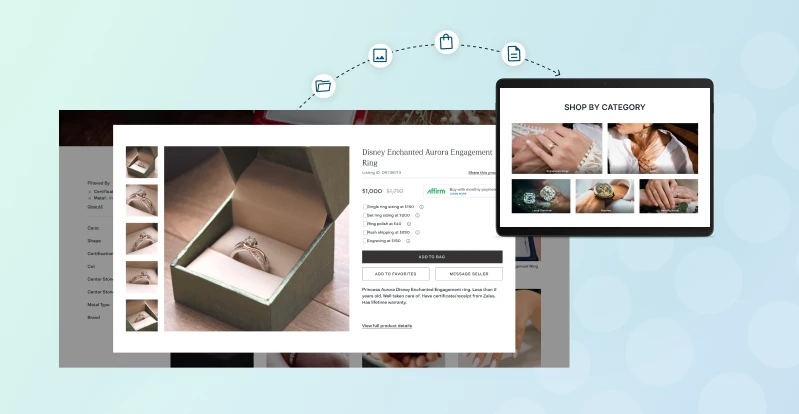
Step 4: Migrate Your Data
This is the step where you import data, and accuracy matters most. Use Shopify’s free Store Importer app for basic transfers, while larger stores may need migration apps to transfer products, images, and customer data. CSV files are often used for products and customer records, while order history, subscription data, customer groups, and Magento product data may require extra validation or third-party tooling. Spot-check a sample of products after import — descriptions, pricing, images, and variants all need to come through correctly before you move forward. Magento passwords cannot be transferred because of encryption differences, so existing customers will need to reset passwords after launch.
Step 5: Recreate Your Design
Invest in custom Shopify theme development rather than settling for a default look. Colour palette, typography, and imagery all need to carry your existing brand identity across — jewellery customers notice inconsistency quickly, and it undermines the trust you’ve built.
Step 6: Integrate Essential Apps
The Shopify App Store offers thousands of plugins that cover most of what a jewellery store needs — from ring-size selectors to gemstone certification displays to loyalty and rewards tools. Prioritise a Shopify app built specifically for jewellery or luxury retail over generic alternatives where possible. Use analytics tools to track user behaviour and store performance before and after launch so feature decisions stay data-led. Keep in mind that some app subscriptions add ongoing operational costs, so selections should be based on business need rather than feature duplication.
Step 7: Test Your Store
Go through your new store as a customer would: browse collection pages and products, add to cart, apply a discount code, and complete checkout. Check site speed, mobile responsiveness, and tablet behaviour specifically – jewellery shoppers frequently browse on mobile before purchasing. Test Shopify Payments and any other payment gateways thoroughly, because high-value jewellery transactions leave little room for checkout failure.
Step 8: Set Up Redirects
Map every old Magento URL to its new Shopify equivalent with proper 301 redirects, creating redirect rules from legacy Magento paths to the new shopify urls that will replace them. This single step is what protects the SEO rankings you’ve already earned – skipping or rushing it is the most common reason migrations lose organic traffic.
Once redirects are live, submit a new sitemap to Google in google search console and update internal links to reflect the new Shopify URLs.
Step 9: Launch and Monitor
Go live, then monitor Shopify store performance and customer feedback closely for the first few weeks. After launch, keep a close eye on Google Analytics and expect that a temporary 10–20% dip in traffic can happen before rankings stabilise. Address issues – broken links, checkout friction, missing product data – quickly, before they compound into lost sales or reviews, and strengthen customer communication if they affect browsing or checkout.
Migration Checklist
How Long Does a Magento to Shopify Migration Take?
Timelines depend on catalogue size and customisation needs. A smaller jewellery store with a few hundred SKUs and a mostly standard theme can migrate in 3–4 weeks. A larger catalogue with custom integrations, multi-currency support, and a bespoke theme build typically takes 6–8 weeks, factoring in thorough testing before launch. Rushing this timeline is where SEO and data-integrity mistakes tend to happen in buffer time for the redirect mapping and testing phases specifically.
Common Migration Mistakes to Avoid
Pro Tips for a Successful Migration
- Work with migration experts if this isn’t your team’s core skill set – expert help supports a smoother migration for complex stores, and an experienced Shopify Plus partner handles the technical risk end-to-end, from data integrity to redirect mapping.
- Back up all data before migration begins by taking a full backup from the Magento site before any changes start, as a safeguard against loss or corruption during transfer.
- Plan customer communication ahead of the switch, and tell existing customers they will need to reset passwords because migrating customer passwords is not possible due to encryption, while also highlighting new features like faster checkout or improved browsing.
- Optimise product listings during the move — review descriptions, product pages, imagery quality, and metadata rather than copying them over unchanged.
- Use Shopify’s built-in features selectively, because Shopify involves choosing the native tools that fit your store best rather than recreating every Magento feature.
Final Thoughts
Moving your jewellery store from Magento to Shopify is a real operational shift — less time spent managing technical overhead, lower ongoing costs, and a platform built to scale as your business grows. The migration itself isn’t complicated, but it does reward careful planning, particularly around data accuracy and SEO redirects. That matters even more for enterprise brands, where merchandising depth, user experience, and revenue impact leave less room for error.
Get those two things right, and the switch pays for itself quickly in time saved and conversion gained. A successful migration should be measured against clear success metrics, including traffic retention, order continuity, and post-launch conversion performance. In practice, migration costs can range from a few hundred dollars to over $50,000, hiring a migration expert can raise that total, Shopify app subscriptions add ongoing operational cost, and a temporary 10–20% traffic dip is common right after launch. Talk to Magneto IT Solutions’ Shopify migration experts to plan a Magento-to-Shopify move that protects your rankings and your customer experience from day one.
FAQs
 How long does a Magento to Shopify migration take?
Most jewellery stores complete migration in 4–8 weeks, depending on catalogue size, customisation needs, and how much testing time is built in before launch.
Will migrating from Magento to Shopify hurt my SEO rankings?
Not if done correctly. Setting up proper 301 redirects from every old URL and keeping metadata consistent preserves your existing search rankings. Rankings are typically lost when redirects are skipped or incomplete, not because of the platform switch itself.
Is Shopify good for jewellery eCommerce stores specifically?
Yes. Shopify’s native mobile responsiveness, App Store ecosystem (including jewellery-specific apps for certifications and customisation), and scalability make it well suited to jewellery brands, particularly those without an in-house development team.
What happens to my Magento product data during migration?
Products, images, customer records, and order histories can all be transferred using Shopify’s Store Importer app or a dedicated migration tool. Spot-checking data after import is essential, since import errors in pricing or variants are the most common post-migration issue.
Do I need a developer to migrate from Magento to Shopify?
Not necessarily for a straightforward store, but custom integrations, complex catalogue structures, or a highly bespoke design are easier to get right with an experienced Shopify migration partner than attempting it entirely in-house.
Should I redesign my store during migration or keep the same design?
Most jewellers use the migration as an opportunity to refresh design and product listings, since you’re already touching every product page. A full redesign isn’t required, but reviewing descriptions, images, and metadata during the move is worth the extra effort.