Personalised Jewellery eCommerce: How Australian B2C Brands Are Using Customisation Tools to Grow
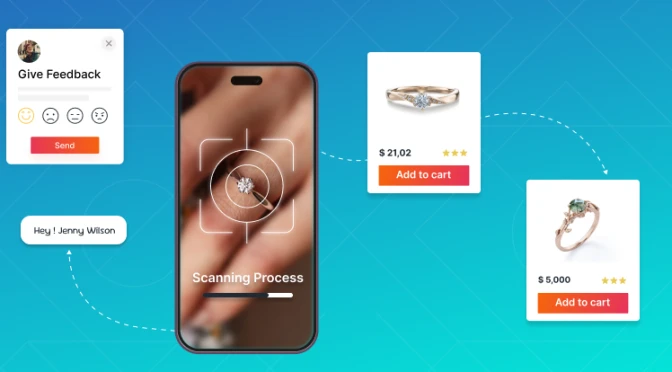
Table of Contents
Buying jewellery used to mean walking into a store, pointing at a display case, and hoping something close to what you wanted was in stock. That model is fading fast in Australia. In personalised jewellery ecommerce, Australian B2C brands are using customisation tools such as metal choice, gemstone selection, engravings, 3D previews, and virtual try-ons to grow by making the shopping experience more personal, lifting conversion rates, and strengthening repeat purchase and loyalty.
Australian consumers spent an estimated $573.6 million on jewellery online in 2024, and the brands capturing that growth aren’t just selling jewellery online they’re letting customers shape the product before they buy. That shift matters because jewellery is one of the most personal, occasion-driven purchases a customer makes, and brands that meet rising expectations for customisation are better positioned to win online sales in a competitive digital market.
For Australian jewellery brand owners, eCommerce managers, and developers, this guide breaks down why personalisation is reshaping B2C jewellery eCommerce, which customisation tools and technology are driving results, what to look for when building a jewellery store designed to convert, how successful Australian brands are applying these features, and which emerging trends are likely to shape the next stage of growth.
Why Personalisation Is Reshaping Australian Jewellery eCommerce
The Australian jewellery market is growing steadily valued at approximately USD 2.90 billion in 2023, with projections reaching USD 3.67 billion by 2031 at a compound annual growth rate of 3.00%. Online sales are growing faster than the category as a whole, and personalisation is the biggest reason.
Customers today want jewellery that feels genuinely theirs, a piece that marks a specific occasion, reflects their personal style, or carries a meaning mass-produced stock simply can’t. That demand has pushed online jewellery retailers to build customisation directly into the shopping experience rather than treating it as an in-store, appointment-only service.
Digital tools make this possible at scale. Detailed product imagery, real-time customisation previews, and virtual try-ons let customers explore and personalise pieces from home – something no physical store, however well-staffed, can replicate for every visitor at once. This is the core value our B2C eCommerce Website Development Services are built around for jewellery and other considered-purchase categories.
Traditional vs. Modern Jewellery Shopping Experiences
Here’s a comparison between traditional and modern Jewellery shopping:
What’s Driving Jewellery Brands Toward Digital Transformation
Four forces are pushing Australian jewellery brands online, and toward personalisation specifically:
- Changing consumer preferences: Shoppers increasingly expect the convenience of online shopping paired with an experience that still feels personal.
- Technological advancement: User-friendly eCommerce platforms and customisation tools that once required custom development are now accessible off the shelf.
- Rising competition: As more brands move online, offering a genuinely differentiated experience not just a digital catalogue has become necessary to stand out.
- Economic conditions: Rising disposable income has increased spending on luxury categories like jewellery, giving brands more reason to invest in a stronger online presence to capture that spend.
Customisation Tools Powering B2C Jewellery Stores
Customisation tools are the features that let a shopper move from “browsing” to actively designing their own piece – metal type, gemstone, engraving, and fit, previewed in real time before they buy.
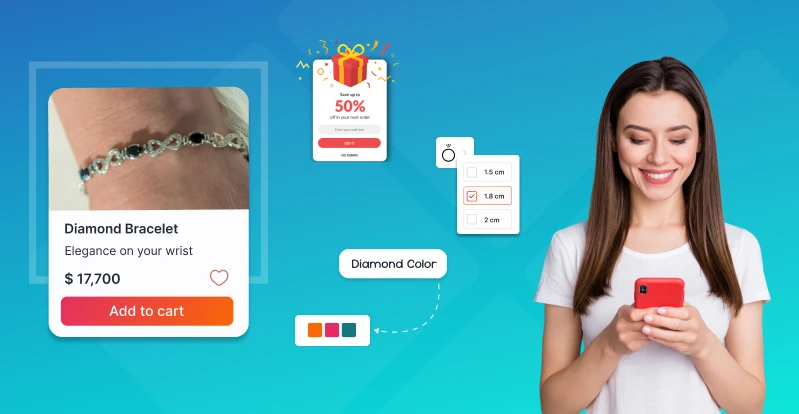
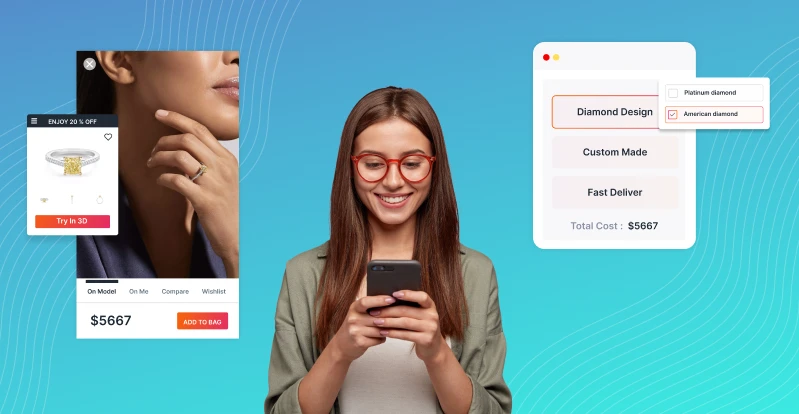
3D visualisation and virtual try-on tools are increasingly standard among Australian jewellery retailers, letting customers see exactly how a customised piece will look before committing to a purchase — a meaningful trust-builder for a category where photos alone rarely tell the full story.
Real-time pricing calculators update the price instantly as a customer adjusts metal, stone, or size, so they always know where they stand against budget without needing to submit an enquiry and wait for a quote.
Size and fitting tools reduce one of the biggest friction points in jewellery eCommerce returns due to poor fit by guiding customers to an accurate size before they order.
How AI and Personalisation Drive Loyalty and Sales
Personalisation doesn’t stop at product design. The strongest-performing jewellery brands use customer data to shape the entire shopping experience:
- AI-driven recommendations suggest products based on what a customer has browsed or purchased before, similar to how streaming platforms recommend content.
- Customer preference tracking records the styles, metals, and price points a shopper gravitates toward, sharpening future recommendations.
- Behavioral analytics reveal how customers actually move through a site, highlighting where the experience creates friction.
- Personalised marketing automation sends offers and updates based on real purchase and browsing history, rather than generic blasts.
- Customer journey mapping and purchase history analysis work together to anticipate what a returning customer might want next a birthday gift, an anniversary upgrade, a matching piece.
The payoff is loyalty. Customers who feel genuinely understood by a brand, rather than marketed generically, are measurably more likely to return and jewellery, with its strong tie to specific life moments, is a category where that emotional connection converts directly into repeat purchases.
Emerging Technology Shaping the Future of Jewellery eCommerce
AI-powered design assistance is moving from novelty to genuine utility, helping customers create pieces that match their style while giving designers and developers data-backed insight into what shoppers actually want.
Blockchain-based authentication is starting to address one of jewellery eCommerce’s biggest trust gaps — proving a piece is genuine and tracing its origin, which matters increasingly to customers buying higher-value items sight-unseen.
Smart jewellery — pieces that combine traditional design with functional technology — is a small but growing category, particularly appealing to younger, tech-forward buyers.
Social commerce is reshaping discovery, letting customers browse, share, and get opinions from friends without leaving a social platform, then complete the purchase with minimal extra steps.
How to Build a Jewellery eCommerce Store That Converts
Choosing the right development partner shapes almost everything that follows site speed, design quality, and how well customisation tools actually work for your customers. If you’re currently on Magento and evaluating a switch, our guide to migrating your jewellery eCommerce store from Magento to Shopify covers the platform decision in detail. Look for a partner with direct jewellery or luxury retail eCommerce experience, not just general web development background.
Store Essentials Checklist
Treat your website as your digital shop window. Every one of these elements — visuals, navigation, checkout speed — either builds enough confidence for a customer to complete a considered, often high-value purchase, or gives them a reason to hesitate and leave.
Is Investing in Jewellery Personalisation Worth It?
For most Australian jewellery brands, yes – the category’s high average order value and strong emotional purchase drivers mean customisation tools tend to pay for themselves through both higher conversion and stronger repeat-purchase rates. The investment scales with ambition: a basic engraving and metal-selection tool is a relatively low-cost addition to an existing store, while a full 3D configurator with real-time rendering and virtual try-on represents a more significant build. Most brands see the strongest return starting with the customisation options customers ask for most (commonly engraving and stone selection) before expanding into 3D visualisation.
How to Build An Optimised Jewellery Store
Finding Your Perfect Website Partner
The Australian Jewellery market is booming online, and picking the right website team can make all the difference. Let’s examine what makes a great Jewellery website development partner.
Look For Reliable Partner
Your platform needs to be remarkable when enhancing user experience with customisation tools. The best jewellery web development teams understand what Australian shoppers want. They create custom solutions that make your store stand out.
Your platform should have:
- Easy-to-use design tools for customers
- Beautiful product displays
- Quick loading pages
- Simple checkout process
Features That Matter Most
Innovative customisation tools for Australian B2C Jewellery retailers are changing how people shop. Your online store in Australia needs:
- 3D Jewellery viewers
- Virtual try-on options
- Size guides with pictures
- Easy product comparison tools
Third-party Integrations
Future trends in this industry shows that systems must work smoothly together. Your Jewellery store development partner should connect:
- Payment systems
- Inventory tracking
- Customer accounts
- Shipping services
Engaging Website Design
Leveraging personalisation to drive Jewellery sales starts with a good website design. Custom platforms should have the following:
- Clear menus
- Easy search options
- Beautiful product photos
- Simple buying steps
Optimised Mobile Application
Most people shop on their phones now. Your site should:
- Work perfectly on all devices
- Load quickly
- Be easy to tap and scroll
- Show clear pictures on small screens
Ensure Security
Customers trust you with their money and information, and strong security is essential to maintain consumer trust. Protect them with:
- Safe payment options
- Account protection
- Secure shopping pages
- Private customer information
Optimise Performance
A fast website makes happy customers. Focus on:
- Quick loading pictures
- Smooth page changes
- Fast checkout process
- Instant search results
Remember, your website is like your digital Jewellery store window. Make it shine with captivating visuals, user-friendly navigation, and a seamless checkout experience. To achieve this, consider investing in Jewellery website design solutions prioritising aesthetics, functionality, and mobile responsiveness.
This will ensure your online store attracts potential customers and provides them with a delightful and engaging shopping experience, ultimately converting visitors into happy customers.
Australian Brands Using Personalisation Successfully
In Australia, several jewellery brands have found success by offering customisation options for custom jewellery to their customers. By allowing individuals to personalise their jewellery, these companies have used e commerce personalisation to grow a jewellery business, expand their product range, and support competitive pricing.
Mejuri
Mejuri started as an online-only jewellery brand and has since expanded into physical locations, including in Australia. Its fine and demi-fine jewellery range includes customisation options that let customers create pieces reflecting their personal style — a core part of what’s made it a go-to brand for shoppers seeking something less generic than mass-market jewellery.
Michael Hill International
One of Australia’s best-known jewellery retailers, has driven sales growth by offering personalisation on core details like gold colour and ring sizing — proof that even established, large-scale retailers benefit from giving customers more control over the finished piece.
Koolaman
Koolaman an Australian jewellery brand founded by two sisters from regional Australia, built personalisation into its brand identity from the start, letting customers add unique touches to their pieces — an approach that clearly resonated with its customer base and contributed directly to its growth.
Conclusion
The Australian jewellery market is shifting decisively toward digital, and personalisation sits at the centre of that shift. Custom design tools, AI-driven recommendations, and immersive visualisation aren’t optional add-ons anymore — they’re what separates a jewellery brand that converts browsers into buyers from one that’s just an online catalogue.
Getting the technology and the experience right takes the right development partner. Connect to Magneto IT Solutions’ Jewellery eCommerce specialists to build a personalised shopping experience that turns your Australian jewellery brand’s online store into a genuine growth channel.
FAQs
 Why is personalisation important in jewellery eCommerce?
Jewellery is a deeply personal, often occasion-driven purchase. Customisation tools like engraving, metal choice, and gemstone selection let customers create something that reflects their own style or marks a specific moment, which drives both higher conversion and stronger customer loyalty than generic product listings.
What customisation tools should a jewellery website offer?
The most valuable tools are metal and gemstone selection, engraving, real-time pricing calculators, accurate size guides, and 3D or virtual try-on visualisation in roughly that order of customer demand and implementation cost.
How big is the online jewellery market in Australia?
Australian online jewellery sales were estimated at approximately $573.6 million in 2024, within a broader Australian jewellery market valued around USD 2.90 billion in 2023 and projected to reach USD 3.67 billion by 2031.
Does jewellery personalisation actually increase sales?
Brands like Michael Hill and Mejuri have reported sales growth tied directly to offering customisation options, and personalisation more broadly is associated with stronger customer loyalty and repeat purchase rates in the jewellery category specifically.
What technology is shaping the future of jewellery eCommerce?
AI-powered design assistance, blockchain-based authentication for verifying authenticity, smart jewellery with embedded technology, and social commerce integration are the four trends most likely to shape the next phase of the category.