How Australian Shopify Stores Can Use AI Analytics to Grow Faster and Sell Smarter
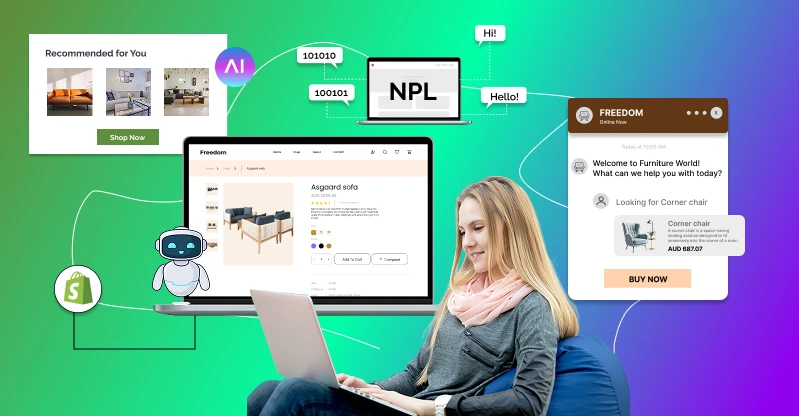
Table of Contents
Running a Shopify store in Australia right now means competing with Amazon, Catch, and eBay while also keeping up with customers who expect personalised experiences, instant answers, and Afterpay at checkout. That is a lot to manage on gut feel alone.
Australia’s online retail market is already generating over $63 billion in annual sales, and more merchants are entering the space every month. The stores that grow consistently are not the ones with the biggest budgets. They are the ones making faster, better-informed decisions from their own data.
That is exactly what AI analytics makes possible. This guide covers how to use it.
Why AI Analytics Is Essential for Shopify Stores in Australia
Australian shoppers have distinct habits that shift by region, season, and demographic. Free shipping is close to an expectation. BNPL adoption through Afterpay and ZipPay is among the highest in the world. Sustainable packaging influences purchase decisions more here than in most markets.
Tracking all of that manually across a growing store is not realistic. AI analytics does it automatically, turning customer behaviour, sales trends, and campaign performance into decisions you can act on immediately.
| Factor | What It Means for Shopify Merchants |
|---|---|
| Heavy Retail Competition | AI helps identify niche opportunities, personalise journeys, and improve retention against larger players. |
| Distinct Local Shopping Habits | AI helps merchants understand and respond to Australian preferences around shipping, sustainability, and BNPL in real time. |
| Rising Customer Expectations | Shoppers now expect instant, accurate, personalised responses throughout their buying journey. |
| Scaling Without Losing the Customer Experience | AI handles increasing volumes of customer interactions while keeping quality and personalisation intact. |
Key Ways to Use AI Analytics for Shopify Growth
AI analytics is game-changing for Australian Shopify stores since it enables businesses to break away from guessing and towards informed decision-making. The following are some strong ways it can be used to drive growth:
Personalised Customer Experiences
Shoppers do not want to browse. They want to be shown what they are likely to buy before they know they want it.
AI tracks behaviour, purchase history, and demographics in real time. A Sydney customer who regularly buys green skincare gets served vegan moisturisers on their next visit. A Melbourne shopper browsing activewear on weekends sees relevant new arrivals first.
AI-driven recommendations have been shown to increase average order value by 10 to 30%, with the biggest gains coming from repeat purchase behaviour over time.
Smart Inventory Management
Stockouts cost you the sale. Overstock costs you the margin. Both are avoidable with accurate data.
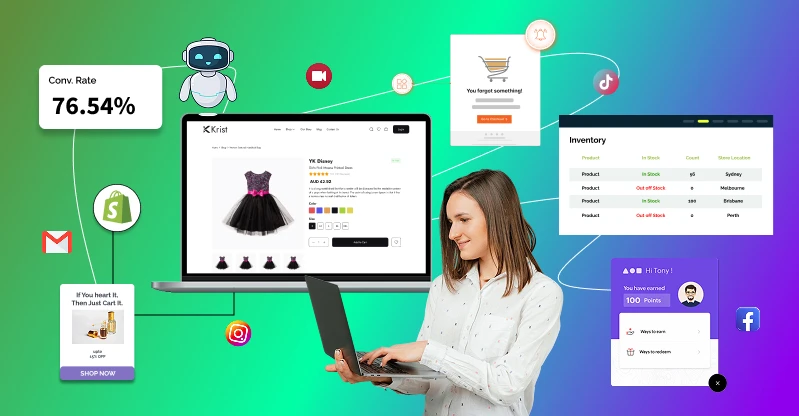
AI demand forecasting analyses your sales trends, seasonal patterns, and real-time stock levels to tell you what to reorder and when. For Australian retailers dealing with distinct summer and winter demand cycles, that foresight makes a measurable difference.
Shopify Sidekick can flag low or excess stock automatically inside your admin, cutting stock-outs by up to 20% without manual monitoring.
AI-Optimised Marketing Campaigns
Most ad spend problems are not creative. They are about targeting and allocation.
AI analyses performance across geographies, channels, and audience segments. If your campaigns are converting in Melbourne but underperforming in Brisbane, AI identifies that and recommends reallocation before you have burned through the budget finding out manually.
Beyond targeting, AI tools generate email subject lines and ad copy variations in minutes. With 56% of eCommerce marketers now using generative AI tools and documented cost savings of up to 50%, the efficiency case is already proven.
Improved Customer Service
Customers who get fast, accurate answers buy more and come back more often.
AI chatbots handle delivery tracking, product questions, and return policies around the clock without needing a human agent. For a fashion retailer dealing with post-purchase anxiety around sizing or delivery, a 24/7 AI response is often the difference between a completed order and an abandoned one.
The real gain is freeing your support team to focus on complex issues that actually need a personal touch.
Dynamic Pricing Strategies
Your competitors are not pricing on instinct, and neither should you.
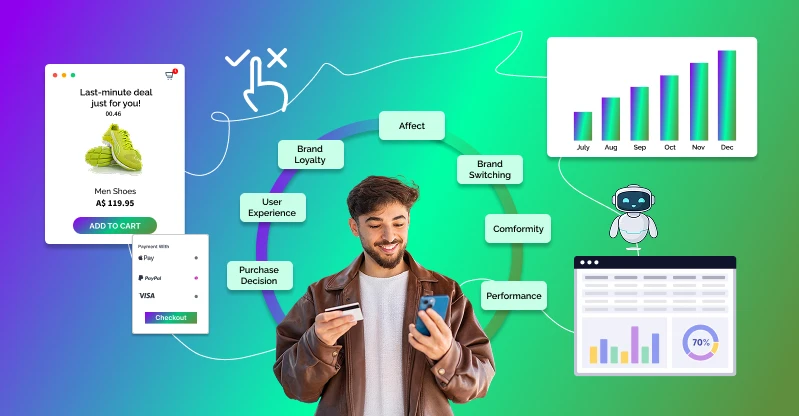
AI tracks competitor pricing, demand shifts, and inventory levels in real time, then recommends adjustments that keep your products competitive without sacrificing margin. For Australian retailers in fast-moving categories like electronics, homewares, or fashion, this kind of responsiveness is increasingly a necessity.
Predictive Retention
Acquiring a new customer costs significantly more than keeping an existing one.
AI identifies at-risk customers before they leave, based on signals like purchase frequency and time since last order. A customer who has not bought in 90 days gets a targeted re-engagement campaign automatically. A loyal buyer who suddenly stops engaging gets a personalised offer before they move on.
These interventions increase customer lifetime value without needing a dedicated retention team watching every account.
Fraud Detection
Chargebacks and fraudulent transactions are a growing burden for Australian eCommerce merchants.
AI-powered tools detect suspicious patterns in real time, repeated failed transactions, unusual IP activity, and flag them before they become costly. Fewer disputes means more consistent cash flow and stronger customer trust in your store.
Website and Checkout Optimisation
AI monitors how customers move through your store and where they stop.
When cart abandonment spikes at a specific checkout step, behavioural analytics identifies the friction point and surfaces a fix, whether that is simplifying payment options, adding Afterpay, or adjusting a high-exit page layout. Stores acting on these insights consistently report abandonment reductions of around 15%, which at scale is meaningful revenue recovery without extra ad spend.
Best AI Tools for Australian Shopify Stores
Some AI-powered tools are capable of assisting Shopify vendors in Australia with better, faster, and more profitable decisions.
Shopify Inbox + AI
Shopify’s native chat tool handles routine customer questions, delivers product recommendations, and keeps conversations moving without manual intervention. For stores without a dedicated support tool, it is the most frictionless place to start.
Klaviyo
The go-to email and SMS platform for Shopify merchants. Klaviyo personalises messaging based on browsing behaviour and purchase history, so an abandoned cart reminder lands with the right product reference rather than a generic prompt.
AdRoll
AdRoll monitors campaign performance across social, email, and display, then reallocates budget toward the highest-performing placements automatically. For merchants spending on paid acquisition, it removes a significant amount of manual optimisation work.
Inventory Planner
Analyse your sales data to predict what you need, when you need it, and how much to order. For Australian retailers navigating seasonal demand shifts, it reduces the risk of both stockouts and overordering.
Tidio AI ChatBot
Provides 24/7 customer support that improves over time by learning from previous conversations. It also proactively engages visitors showing exit intent, which makes it useful for reducing abandonment on product and checkout pages.
Prisync
Monitors competitor pricing and recommends real-time adjustments based on market conditions and your own margin targets. For stores in price-sensitive categories, it takes the guesswork out of staying competitive.
Where AI Analytics in Australian eCommerce Is Heading
The use of AI in Australian eCommerce will only increase. Some of the most important future trends to watch out for are as follows:
Hyper-Personalised Storefronts
Homepages and collection pages that adapt individually to each visitor based on their full purchase and browsing history. A Perth customer interested in sustainable products sees a different store experience than a Sydney shopper browsing tech, automatically and in real time.
Voice and Conversational Commerce
Smart assistants are already in Australian homes. As voice search behaviour grows, stores optimised for conversational queries will capture demand that keyword-focused stores miss. AI is what makes those experiences feel natural.
Deeper BNPL Integration
Australia’s appetite for Afterpay and ZipPay is not slowing down. AI will move beyond simply offering BNPL at checkout toward personalising instalment options and reducing friction for hesitant buyers.
AI-Driven Supply Chain Optimisation
From predicting delivery delays to optimising shipping routes across Australia’s geographically spread logistics network, AI is moving deeper into the supply chain. The practical result is lower delivery costs and fewer complaints about late orders.
Sustainability Insights
Australian consumers increasingly factor environmental impact into purchasing decisions. AI will give merchants the ability to measure and communicate the sustainability footprint of individual products, turning environmental responsibility into a measurable commercial advantage.
AR-Powered Shopping Experiences
Furniture retailers can let Melbourne customers visualise a sofa in their living room before purchase. Apparel stores can offer virtual fit tools that reduce return rates. AI is what makes these experiences accurate and scalable rather than gimmicky.
The Stores That Use Their Data Well Will Win This Market
Australia’s eCommerce market is not slowing down, and neither are customer expectations.
The Shopify merchants who grow consistently will not necessarily have the biggest budgets. They will be the ones making faster, better-informed decisions at every level of their operation, from inventory to pricing to retention.
AI analytics makes that possible today, not in some future state. The tools are accessible, the ROI is measurable, and the advantage of moving early is real.
Pick one area where better data would immediately change a decision you are currently making. Start there, build from it, and the compounding effect on your store’s performance becomes clear quickly.
Connect with a Shopify development partner to implement AI analytics in a better manner to ensure business success.
FAQs
 What is AI analytics in Shopify?
AI analytics utilises machine learning and predictive intelligence to analyse customers, market automation, stock optimisation, and customer experience personalisation.
How does AI analytics help Australia's sales?
It assists in making customer-like decisions, personalising experiences, forecasting demand, and marketing campaign automation—increasing sales in a moment.
Is AI analytics costly for small Shopify stores?
Not necessarily. Certain Shopify applications, such as Tidio, Klaviyo, and Prisync, come with affordable pricing for small-sized enterprises.
Can AI analytics assist with Australian-specific payment products such as Afterpay?
Yes. AI can analyse payment patterns and suggest offering domestic BNPL products such as Afterpay or ZipPay to enhance conversions.
Which are the most employed AI tools for an Australian Shopify business?
The most common ones are Klaviyo (marketing), Inventory Planner (inventory planning), Tidio AI Chatbot (customer support), and Prisync (dynamic pricing).
Does AI analytics replace the need for human oversight?
No. AI tools like Shopify Magic can generate product descriptions and marketing content quickly, but outputs still need human review for accuracy, brand tone, and compliance — especially for customer-facing content.
What's the difference between Shopify Analytics and AI analytics tools?
Shopify Analytics tracks core metrics like sales, traffic, and conversion rates. Third-party AI analytics tools build on this by adding predictive insights — like demand forecasting, churn risk, and personalised recommendations — that native analytics don’t typically provide.