How Technology Is Transforming Australia’s Grocery Industry
Table of Contents
Australian supermarkets are under more pressure than ever. Rising operational costs, shifting shopper expectations, and intensifying competition from online-first players are forcing grocery retailers to rethink how they operate from the ground up.
The good news? Technology has never been more accessible or more powerful.
From AI-driven inventory management to cashier-less checkout and drone delivery, the right digital tools can cut costs, reduce waste, and turn a one-time shopper into a loyal repeat customer. This guide breaks down exactly which technologies are driving results in Australian grocery retail industry.
In this blog, we will discuss how various technological solutions can transform the fundamental operations of a grocery store so that businesses can stay competitive in an increasingly dynamic marketplace.
The State of the Australian Grocery Industry in 2026
Australia’s grocery sector is one of the most competitive retail markets in the Asia-Pacific region. According to IBISWorld, there are approximately 2,396 supermarket and grocery store technology businesses in Australia, a sector that has grown at a CAGR of 1.6% from 2020 to 2025.
But growth figures alone don’t capture the full picture. The real disruption is happening at the operational level:
- Online grocery sales in Australia reached $6.4 billion in 2024, up from $3.1 billion in 2020 (Australia Post eCommerce Industry Report)
- Among major retailers, online sales for major Australian supermarkets reached 11.3% to 16.6%, showing how quickly digital channels are becoming core to grocery revenue
- 74% of Australian shoppers now use a grocery retailer’s app or website at least once per month (Statista, 2024)
- Food waste costs the Australian grocery industry an estimated $20 billion annually (FIAL, 2023)
- Labour costs represent 12–16% of total grocery store revenue, making automation a priority for margin-conscious operators
For independent grocery retailers and mid-market chains, the challenge is clear: compete with category-defining giants like Woolworths and Coles by leveraging the same technology — without enterprise-scale budgets.
How Australian Shopper Behaviour Is Changing
Understanding what’s driving customer behaviour is the first step to choosing the right technology. Recent research also points to a demographic shift in how Australians buy groceries. Five major shifts are reshaping Australia’s grocery landscape right now. One in four Australian households are single-person households, single-person households have increased by 50% since the 1980s, and apartment living is becoming more prevalent in major Australian cities.
1. Convenience Is the New Loyalty Driver
Australian shoppers increasingly expect same-day delivery, click-and-collect, and self-checkout as standard. A 2024 Roy Morgan report found that 38% of Australians now do at least some grocery shopping online – up from 22% pre-pandemic. Retailers who can’t offer frictionless, multichannel shopping risk losing customers to those who can.
2. Health and Sustainability Are Purchase Triggers
Demand for organic, locally sourced, and plant-based products has surged, with dairy serving as a clear example of a category where freshness, provenance, and sustainability signals influence purchase decisions. More than 60% of Australian consumers say they actively seek out products with sustainable packaging (Nielsen, 2024). Meat is another example where trusted sourcing and transparency increasingly shape shopper confidence. Blockchain-based food traceability and digital provenance labelling are becoming powerful trust signals – especially for premium and health-focused grocery brands.

3. Price Sensitivity Is at a 10-Year High
With inflation squeezing household budgets, Australian shoppers are actively hunting for value. Own-label (private label) products, bulk buying, and loyalty discount programs are all seeing strong growth. Retailers with AI-powered dynamic pricing and targeted loyalty offers are better placed to retain price-sensitive customers without sacrificing margin.
4. Digital-First Shoppers Expect Personalisation
Grocery apps that offer personalised recommendations, tailored promotions, and easy reordering are driving measurable engagement gains. Customers who receive personalised communications spend 20–30% more than those who receive generic messaging (McKinsey, 2023). Voice-based reordering is also an expected growth area, with voice shopping for groceries expected to reach $40 billion by 2022.
5. Trust and Transparency Matter More Than Ever
High-profile food safety incidents and growing concern about supply chain ethics mean that shoppers are paying closer attention to where their food comes from. Technologies like blockchain and IoT-enabled cold chain monitoring are shifting from differentiators to customer expectations in premium and health-focused grocery segments.
Key Benefits of Technology for Grocery Stores
| Benefit | What It Delivers | Technologies Involved |
| Operational efficiency | Reduces labour costs, minimises errors, automates repetitive tasks | Automation, RFID, AI, robotics |
| Inventory accuracy | Cuts stockouts and overstocking, reduces waste | IoT sensors, demand forecasting AI, RFID |
| Customer experience | Faster checkout, personalised offers, omnichannel access | Self-checkout, loyalty apps, AI recommendations |
| Supply chain visibility | Real-time tracking, fewer delays, compliance assurance | Blockchain, route optimisation AI, WMS |
| Security and fraud prevention | Protects payment data, reduces theft and chargebacks | AI fraud detection, biometrics, MFA |
| Sustainability | Reduces waste, lowers energy costs, improves brand reputation | AI waste management, IoT refrigeration, e-receipts |
| Revenue growth | Drives repeat purchases, increases basket size | CRM, personalisation engines, dynamic pricing |
The ROI Case for Technology Investment
Grocery retailers who invest in core technology platforms typically see:
- 15–25% reduction in inventory holding costs through AI-driven demand forecasting
- Up to 30% reduction in food waste using IoT-connected shelf monitoring
- 12–18% improvement in checkout throughput with self-service and mobile payment options
- 20–35% increase in loyalty program engagement with personalised digital offers
- Stronger ROI from digital transformation when automation, fulfilment, and customer data are connected across channels
10 Technologies Transforming Australian Grocery Businesses
1. AI-Powered Inventory Management
What it is: Intelligent inventory systems that use machine learning, historical sales data, and real-time demand signals to automate stock replenishment and reduce waste.
How it works:
- RFID and barcode scanning provide item-level tracking accuracy
- AI demand forecasting predicts future sales patterns based on seasonality, weather, promotions, and local events
- IoT shelf sensors detect low stock levels and trigger automatic replenishment alerts
- Cloud-based dashboards give store managers real-time visibility across multiple locations
Why it matters for Australian retailers: Australian grocery stores throw away billions of dollars in perishable stock annually. AI inventory tools can reduce perishable waste by up to 30% while simultaneously cutting stockout incidents a direct win for both margin and customer satisfaction
2. Smart Checkout and Payment Systems
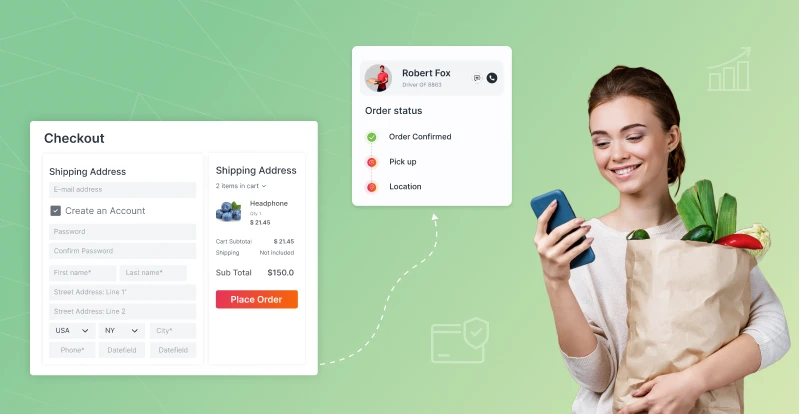
What it is: Technologies that speed up the payment process, reduce queue times, and improve transaction security.
| Checkout Technology | Key Benefit | Adoption in Australia |
| Self-service checkout kiosks | Reduces staffing needs at peak times | Widespread (Woolworths, Coles, IGA) |
| Mobile scan-and-go | Eliminates checkout queues entirely | Growing (Woolworths app) |
| Contactless / NFC payments | Faster transactions, reduced touchpoints | Near-universal |
| AI-powered cashier-less stores | Zero-friction checkout experience; Foodstuffs’ SMARTCART in New Zealand uses artificial intelligence to scan items automatically and link purchases to a customer account | Early adoption (Woolworths pilot) |
| Biometric payment verification | Enhanced security, faster authentication | Emerging |
For independent retailers: Self-service kiosks and mobile payment integrations offer the fastest ROI with relatively low implementation costs. Cashier-less technology, while compelling, currently suits high-footfall urban locations best; Amazon Go popularised the concept with no checkout stands or clerks, using hundreds of cameras and sensors for tracking. These stores are widely seen as the supermarkets of the future.
3. eCommerce and Online Grocery Shopping Platforms
Digital storefronts, mobile apps, and fulfilment systems that enable grocery retailers to sell online, whether through delivery, click-and-collect, or online grocery shopping.
Australia’s online grocery market is growing fast, and the quick commerce market is projected to grow over 22% annually. The industry leaders winning online share are those adapting their business models for faster fulfilment and omnichannel growth through Grocery eCommerce Development Services:
- Progressive Web Apps (PWAs): fast, app-like online store experiences optimised for mobile
- AI-driven product recommendations: showing shoppers relevant products based on purchase history
- Flexible fulfilment: same-day delivery, next-day delivery, and click-and-collect options
- Subscription ordering: Grocery eCommerce Development Services enabling customers to automate regular staple purchases
- Omnichannel loyalty integration: unifying in-store and online purchase history for consistent personalisation
4. Personalisation and Customer Loyalty Technology
CRM systems, loyalty platforms, and AI engines that use customer data to deliver relevant offers, rewards, and product recommendations.
The personalisation advantage:
- Customers engaged through personalised loyalty programs visit 35% more frequently than non-enrolled customers
- AI-driven email and push notification campaigns see 2–3x higher open rates than generic broadcasts
- Dynamic personalised promotions can increase average basket size by 15–20%
What to implement:
- A unified customer data platform (CDP) that links in-store and online behaviour
- Points-based loyalty program with tiered rewards
- AI recommendation engine integrated into your app and website
- Targeted promotion engine triggered by purchase frequency, basket composition, and lapsed behaviour
5. Supply Chain and Logistics Technology
End-to-end supply chain management tools that connect suppliers, warehouses, distribution centres, stores, and specialised facilities such as dark stores or fulfilment centres, reducing delays, costs, and compliance risk.
Key components:
- AI route optimisation — minimises delivery time and fuel costs by dynamically adjusting delivery routes
- Blockchain food traceability — provides end-to-end visibility of product origin, handling, and storage conditions (critical for recalls and compliance)
- Automated ordering systems — replaces manual purchase orders with AI-triggered replenishment
- Robotic warehouse automation — high-speed pick-and-pack operations reduce fulfilment time and labour costs; robots can fulfill a 50-item grocery order in about five minutes
- Real-time shipment tracking — gives store managers and customers accurate delivery ETAs
Dark stores can allow human pickers to fulfill orders in under two minutes.
Australian context: Australia’s geographic spread makes logistics efficiency especially valuable. From a margin and service-level perspective, the shift toward automated fulfilment matters because faster picking helps grocers serve metro and regional demand more efficiently. AI route optimisation has shown 10–20% fuel cost reductions for grocery delivery fleets operating in metro and regional areas.
6. AI-Powered Customer Service
What it is: Artificial intelligence powers chatbots, virtual assistants, and automated support tools that handle customer enquiries, order tracking, and product questions 24/7.
Practical applications for grocery retailers:
- Website and app chatbots — handle order status queries, substitution questions, and store hours enquiries without staff involvement
- Voice assistants — integrate with smart home devices to enable voice-based shopping list creation and reordering
- Automated complaint resolution — handle refund and substitution issues at scale during high-demand periods
- NLP-powered search — improve product discovery by understanding natural language queries (“gluten-free pasta under $3”)
These agents can build extensive knowledge of consumer habits over time. Consumers often lack insight into how algorithms determine product selections and may end up relying on automated suggestions.
Cost impact: AI customer service tools can handle 60–80% of routine enquiries without human escalation, reducing customer service staffing costs significantly during peak trading periods. Regulatory bodies must ensure transparency in retail, especially where AI can influence choices toward processed foods.
7. Sustainability and Waste Reduction Technology
What it is: Tools and systems that help grocery retailers reduce food waste, lower energy consumption, and meet growing customer expectations for environmental responsibility.
Sustainability tech toolkit:
| Technology | Application | Business Benefit |
| AI waste management software | Tracks perishable sales velocity, triggers markdowns before expiry | Reduces waste, protects margin |
| IoT-connected refrigeration | Monitors temperature in real time, alerts on deviation | Reduces energy costs 20–30%, prevents stock loss |
| Digital receipts | Eliminates paper receipts entirely | Cost saving + sustainability signal |
| Smart reusable packaging | RFID-tracked reusable containers | Reduces packaging cost, appeals to eco-conscious shoppers |
| Food donation platforms | Connects surplus stock with local charities automatically | Reduces disposal costs, builds community goodwill |
The business case for sustainability tech: Beyond environmental responsibility, these tools generate measurable financial returns. IoT refrigeration optimisation alone can reduce a grocery store’s energy bill by 20–30% annually.
8. Security and Fraud Prevention
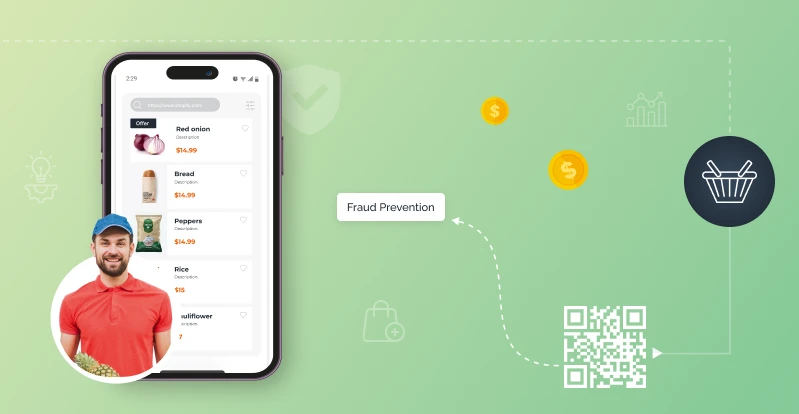
What it is: Cybersecurity systems, payment fraud detection tools, and physical loss prevention technology that protect both customer data and store revenue.
Critical security layers for grocery retailers:
- Payment data encryption (PCI-DSS compliance) — mandatory for any retailer processing card transactions
- AI fraud detection — identifies unusual transaction patterns in real time and flags or blocks suspicious activity
- Multi-factor authentication (MFA) — secures access to POS systems, inventory platforms, and back-office tools
- Behavioural analytics — detects insider threats and unusual access patterns across store systems
- Secure cloud storage — protects customer and business data with enterprise-grade backup and recovery
Loss prevention note: AI-powered computer vision in self-checkout areas has shown 15–20% reductions in shrinkage compared to unmonitored self-service environments.
9. Edge Computing for Real-Time In-Store Analytics
What it is: Processing data locally at the store level (rather than sending it to a central cloud) to enable faster, real-time decision-making.’
In-store applications:
- Real-time heat mapping of customer traffic to optimise product placement on shelves and improve movement through the store
- Instant checkout fraud detection without network latency; in cashierless formats such as Amazon Go, stores have no checkout stands or clerks
- Live inventory updates that sync with eCommerce stock availability
- Personalised digital signage triggered by customer demographics or time of day
Why edge matters: In a high-volume grocery environment, milliseconds matter. Edge computing enables the kind of real-time responsiveness that cloud-only architectures can’t always deliver – particularly during peak trading periods or when network connectivity is inconsistent, with these data-rich layouts also helping shape the future of physical stores.
10. Drone Delivery
What it is: Autonomous aerial delivery systems that transport grocery orders directly to customers’ homes or designated pickup points.
Current state in Australia: Australia is one of the most advanced markets for drone delivery globally. Wing (Alphabet’s drone delivery subsidiary) has been operating in Logan, Brisbane, and parts of Canberra since 2019. Zipline expanded Australian operations in 2024. Regulatory frameworks from CASA are maturing, making commercial grocery drone delivery viable for forward-thinking retailers.
Best application for grocery retail:
- Last-mile delivery for urgent or high-margin items (pharmacy products, premium fresh produce)
- Servicing regional or low-density suburban areas where traditional delivery is uneconomical
- Express delivery tiers (15–30 minute delivery for compact orders)
Limitations to consider: Weight restrictions (typically under 2.5kg per delivery), weather sensitivity, and regulatory approval requirements mean drone delivery currently suits a specific segment of the grocery assortment rather than full-basket orders.
Technology Adoption Checklist for Grocery Retailers
Use this checklist to assess where your grocery business currently stands — and prioritise your technology roadmap.
Retailers should explore new tools based on ROI, operational readiness, and customer demand.
Foundational Technology (Must-Have)
- Cloud-based Point of Sale (POS) system with real-time reporting
- Basic inventory management with barcode scanning
- Contactless and digital payment acceptance
- Secure payment processing (PCI-DSS compliant)
- Responsive website with accurate store information
Growth Technology (High ROI, Implement Next)
- AI-powered demand forecasting and inventory optimisation
- Digital loyalty program with purchase tracking
- Click-and-collect or delivery capability
- Self-checkout or mobile scan-and-go option
- Automated email/SMS marketing with personalisation
Advanced Technology (Scale and Differentiate)
- Full eCommerce platform with mobile app
- AI-driven product recommendations and dynamic promotions
- Omnichannel CRM (unified in-store and online customer profiles)
- IoT-connected refrigeration and energy management
- Blockchain food traceability (for premium/health-focused assortments)
- AI customer service chatbot
Emerging Technology (Monitor and Pilot)
- Cashier-less / walk-out shopping technology
- Drone delivery for last-mile fulfilment
- Augmented reality (AR) shopping experience
- Edge computing for real-time in-store analytics
Ready to Build a Technology-Driven Grocery Business?
The retailers winning in Australia’s grocery market aren’t just the biggest — they’re the most strategically technology-enabled. Whether you’re building a grocery eCommerce platform from scratch, integrating AI into your existing operations, or developing a loyalty app that keeps customers coming back, we’re committed to helping grocers modernise operations and growth, because the right technology partner makes the difference between implementation that works and investment that stalls.
Magneto IT Solutions has delivered eCommerce and digital commerce solutions for grocery and FMCG retailers across Australia and the Asia-Pacific region. Our team specialises in Shopify Plus, Adobe Commerce, and composable commerce architectures purpose-built for grocery retail, with a focus on implementation-led innovation and measurable outcomes.
FAQs
 What technology do grocery stores use to manage inventory?
Modern grocery stores use a combination of RFID tagging, barcode scanning, IoT shelf sensors, and AI demand forecasting to manage inventory. These systems track stock levels in real time, predict future demand based on sales history and seasonal trends, and automatically trigger replenishment orders.
How can AI improve the customer experience in a supermarket?
AI improves the supermarket customer experience in several ways: personalised product recommendations based on purchase history, AI-powered chatbots for 24/7 customer support, dynamic pricing that offers relevant discounts to loyalty members, and cashier-less checkout systems that eliminate queues.
What is the cost of implementing technology in a grocery store?
Technology investment costs vary significantly by store size and solution complexity. Entry-level solutions – such as a cloud POS system, contactless payments, and basic inventory management can be implemented for 5,000–20,000 AUD for a single-site retailer.
How does blockchain improve food traceability in supermarkets?
Blockchain creates an immutable, shared digital record of every step in a food product’s journey – from farm to shelf. Each transaction (harvest, processing, transport, storage, sale) is recorded as a block in a chain that cannot be altered. This enables supermarkets to trace a product’s origin and handling history within seconds, which is critical for rapid food recalls, proving provenance claims (e.g. “Australian-grown”), and assuring customers of food safety standards.
How is technology helping Australian supermarkets reduce food waste?
Australian supermarkets are using three main technology approaches to reduce food waste: (1) AI demand forecasting that reduces overordering of perishables; (2) IoT shelf monitoring that triggers automatic markdown pricing as products approach expiry; and (3) food donation platform integrations that connect surplus stock with local charities automatically.
What eCommerce platform is best for an Australian grocery store?
The best eCommerce platform for an Australian grocery store depends on scale and complexity. Shopify Plus development suits independent and mid-market grocery retailers needing fast time-to-market with strong app integrations. Adobe Commerce (Magento) suits larger retailers with complex product catalogues, custom pricing rules, and enterprise integration requirements. Both platforms support grocery-specific features including scheduled delivery slots, substitution management, and loyalty program integration.
How to build an online grocery store in Australia.
To build an online grocery store in Australia, choose a scalable eCommerce platform, add secure payments, real-time inventory, product search, delivery options, and mobile-friendly features. Integrate ERP, POS, and logistics systems, then use AI personalisation and digital marketing to drive sales.
For a detailed guide, read How to Build an Online Grocery Stutmore in Australia