How Digital Commerce is Transforming B2B and D2C Business Models in the UK
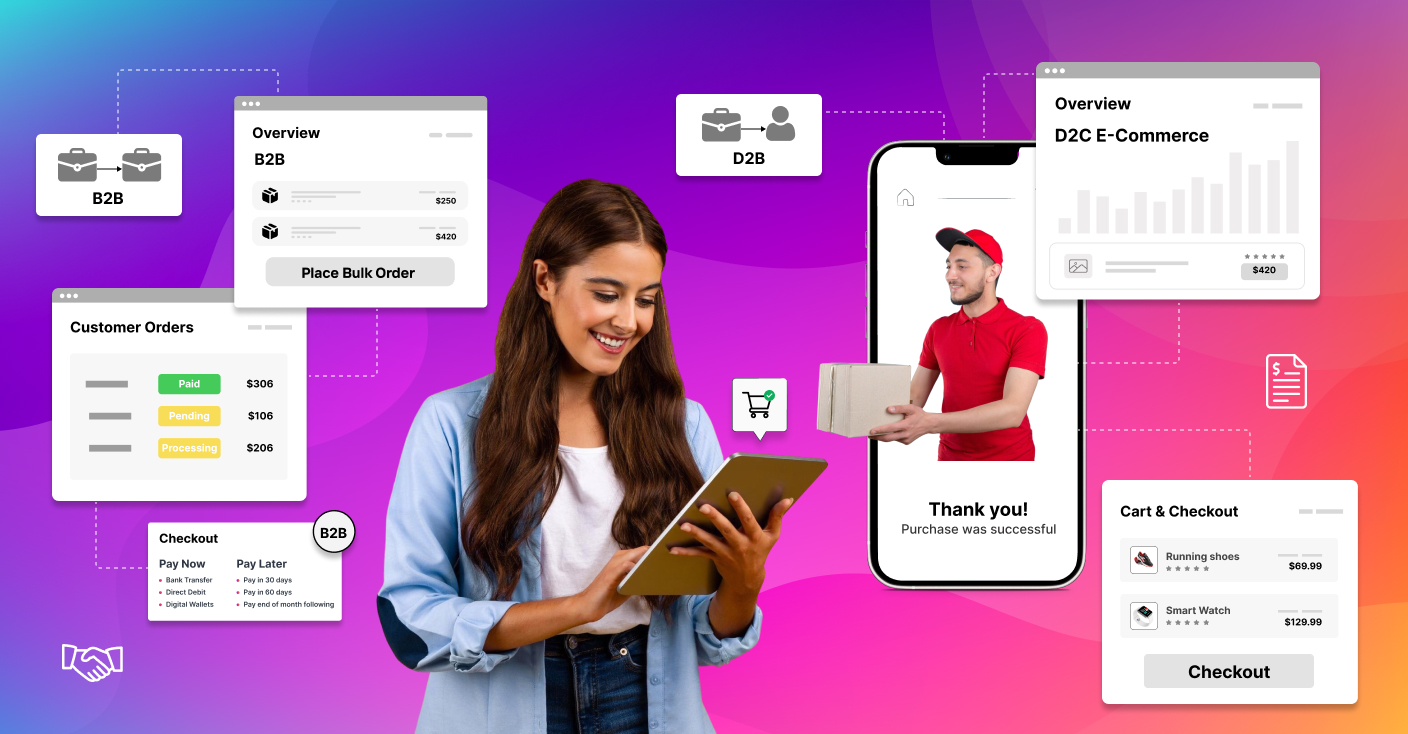
Table of Contents
The UK commerce landscape is rapidly transforming as businesses adopt digital-first strategies. The traditional divide between B2B and D2C is fading, replaced by a more integrated, experience-led approach driven by technology, data, and changing customer expectations.
This shift is driven by buyers’ preference for how they engage. According to McKinsey & Company, over 70% of B2B decision-makers prefer digital self-service and remote interactions to traditional sales engagement, underscoring the growing demand for seamless, independent buying experiences.
We’ve seen how businesses are reshaping their operations to stay competitive in this evolving market. Digital commerce today is about more than just selling; it’s about delivering seamless, personalised, and scalable experiences across every touchpoint.
Whether you’re a manufacturer, wholesaler, or consumer brand, adapting to this shift is essential for long-term success.
In this blog, we will explore how this transformation is redefining the future of commerce in the UK.
The Rise of Digital Commerce in the UK
Digital commerce is no longer just a trend; it has become the foundation of how modern businesses operate in the UK. Today’s customers, whether businesses or consumers, expect more than just products; they demand convenience, speed, and deeply personalised experiences.
As organisations embrace cloud platforms, AI, and connected systems, commerce is evolving into a unified ecosystem where every touchpoint matters. This shift enables businesses to deliver consistent experiences across channels while streamlining operations behind the scenes.
To stay competitive, organisations are increasingly focusing on building scalable digital ecosystems that seamlessly bring together data, technology, and customer experiences to drive growth.

How B2B Commerce is Evolving Digitally
Traditional B2B models relied heavily on offline relationships, manual processes, and lengthy sales cycles. While these approaches were effective in the past, they are no longer sufficient in a market where buyers expect speed, transparency, and control.
Today, digital transformation is not just enhancing B2B operations it is fundamentally reshaping how businesses manage complex transactions, integrate systems, and deliver consistent experiences at scale.
For many UK enterprises, the shift is being driven by the need to handle large product catalogues, complex pricing structures, and multi-layered approval workflows ,all while maintaining efficiency and accuracy. This requires more than just digitisation; it requires a connected ecosystem where systems, data, and processes work together seamlessly.
Self-Service Portals and Automation
Modern B2B buyers expect seamless, self-service experiences similar to leading B2C platforms. They want the ability to browse extensive product catalogues, access contract-specific pricing, and place orders without delays or manual intervention.
Digital commerce platforms are now designed to support these expectations by integrating directly with backend systems such as ERP, CRM, and inventory management tools. This ensures real-time data synchronisation, allowing businesses to automate order processing, pricing updates, and account management.
For enterprises managing high transaction volumes, this level of automation reduces operational bottlenecks, improves order accuracy, and significantly shortens processing times. It also enables internal teams to shift focus from routine tasks to more strategic activities.
Personalisation in B2B
Personalisation in B2B has evolved from basic segmentation to highly tailored, account-specific experiences. Buyers now expect interactions that reflect their unique requirements, including customised pricing agreements, relevant product recommendations, and personalised catalogues.
By leveraging integrated data from multiple systems, businesses can create a unified view of each customer. This enables more precise targeting and improves engagement across the buying journey.
For organisations operating at scale, personalisation is not just a value-add it is a key driver of customer retention and revenue growth, particularly in competitive markets where differentiation is critical.
Faster Decision-Making
Access to real-time data has become a critical requirement for modern B2B operations. Integrated systems provide visibility into inventory levels, customer activity, and sales performance, enabling businesses to make faster, more informed decisions.
This reduces approval delays, improves demand forecasting, and enables businesses to respond quickly to market changes.
For leadership teams, this level of visibility transforms decision-making from reactive to proactive, helping organisations identify opportunities, minimise risks, and optimise performance across the business.
The Growth of D2C in the UK Market
D2C is gaining significant traction in the UK as brands seek greater control over customer relationships, data, and overall business performance. By selling directly to consumers, businesses can eliminate intermediaries and create more meaningful, data-driven interactions.
However, while the D2C model offers clear advantages, scaling it successfully requires strong operational foundations. As order volumes increase and customer expectations rise, businesses must ensure their backend systems can support consistent, efficient delivery.
Direct Customer Relationships
D2C enables businesses to capture first-party data at every stage of the customer journey. This includes browsing behaviour, purchase history, and engagement patterns, all of which provide valuable insights into customer preferences.
With this data, businesses can create more targeted marketing strategies, improve product offerings, and deliver personalised experiences that drive loyalty and repeat purchases.
For enterprises, this data becomes a strategic asset that informs not only marketing but also broader business decisions.
Brand Control and Storytelling
With D2C, businesses have complete control over how their brand is presented and experienced. From website design to customer communication, every touchpoint can be aligned with the brand’s identity and objectives.
This level of control enables organisations to create consistent, engaging customer journeys, which are essential for building trust and differentiation in competitive markets. However, maintaining this consistency across multiple channels requires integrated content, commerce, and customer data systems.
Improved Margins
By removing intermediaries, businesses can improve profit margins and gain greater pricing and promotional flexibility. However, achieving sustainable profitability requires efficient backend operations. This includes streamlined order management, integrated fulfilment processes, and accurate inventory tracking. Without these capabilities, operational costs can increase, reducing the overall benefits of the D2C eCommerce development model.
Convergence of B2B and D2C Models
One of the most notable trends is the blending of B2B and D2C models. Businesses are no longer limited to a single approach—they are adopting hybrid strategies to expand market reach and optimise revenue streams.
- B2B companies are launching D2C channels to reach end consumers directly
- D2C brands are entering wholesale markets to scale faster
- Unified platforms enable seamless management of both models
This convergence introduces new levels of complexity, particularly in managing inventory, pricing, and customer data across multiple channels. Businesses that rely on separate systems often face duplication, inefficiencies, and inconsistencies.
In contrast, organisations that adopt unified commerce platforms can centralise operations, improve visibility, and deliver consistent experiences across both B2B and D2C channels. This not only enhances efficiency but also supports long-term scalability.
Key Technologies Driving Digital Commerce Transformation
Digital commerce is powered by advanced technologies that enable businesses to scale efficiently, integrate systems, and deliver data-driven experiences.
Artificial Intelligence (AI)
AI enables businesses to process large volumes of data and generate actionable insights. It supports personalisation, automates customer interactions, and improves demand forecasting. By using AI-driven tools, businesses can enhance customer engagement while reducing manual effort.
Cloud Computing
Cloud platforms provide the flexibility required to scale operations without heavy infrastructure investments. They also support seamless integration between systems, enabling businesses to adapt quickly to changing market demands. For growing enterprises, cloud infrastructure ensures reliability, scalability, and cost efficiency.
Headless Commerce
Headless architecture separates the frontend from the backend, allowing businesses to deliver consistent experiences across multiple channels. This approach provides greater flexibility in development and enables faster innovation, particularly for organisations managing complex customer journeys.
Data Analytics
Data analytics provides insights into customer behaviour, operational performance, and sales trends. When integrated across systems, these insights enable businesses to optimise strategies, improve forecasting, and make informed decisions that drive growth.
Challenges in Digital Commerce Adoption
Despite its advantages, digital transformation comes with challenges that can impact performance and scalability.
Integration Complexities
Integrating multiple systems such as ERP, CRM, PIM, and eCommerce platforms requires a well-defined architecture. Without proper planning, integration can lead to inefficiencies and data silos. For enterprises, this is one of the most critical challenges, as it directly impacts operational efficiency and scalability.
Data Management
Managing large volumes of data across systems requires strong governance and infrastructure. Inconsistent or inaccurate data can lead to poor decision-making and reduced customer satisfaction. Ensuring data accuracy and consistency is essential for maintaining trust and operational efficiency.
Changing Customer Expectations
Customer expectations continue to evolve, requiring businesses to deliver faster, more personalised, and consistent experiences. Failure to meet these expectations can result in reduced engagement and lost revenue opportunities.
Skill Gaps
Implementing and managing modern commerce solutions requires specialised expertise. Many businesses face challenges in building and retaining the right talent. Working with experienced partners can help address these gaps and ensure successful execution.
Benefits of Digital Commerce Services for UK Businesses
Digital commerce enables businesses to improve performance across multiple areas when implemented effectively.
Enhanced Customer Experience
Integrated platforms enable businesses to deliver seamless, personalised experiences across all channels, thereby improving customer satisfaction and loyalty.
Increased Operational Efficiency
Automation and system integration reduce manual processes, minimise errors, and improve productivity across teams.
Scalability
Digital commerce solutions support business expansion into new markets and channels without significant infrastructure changes.
Data-Driven Decision Making
Access to real-time data enables businesses to make informed decisions, optimise strategies, and respond quickly to market changes.
Strategies for Successful Digital Transformation
To maximise the impact of digital commerce, businesses must adopt a structured and scalable approach.
Focus on Customer Experience
Delivering consistent and personalised experiences across all touchpoints is essential for long-term success. Businesses need to leverage unified customer data, optimise journeys across channels, and continuously refine interactions to improve engagement, retention, and overall lifetime value.
Invest in Technology
Businesses should adopt scalable and flexible technologies that support integration and future growth. This includes selecting platforms that seamlessly integrate with ERP, CRM, and other systems, enabling automation, real-time data flow, and quick adaptation as business needs evolve.
Build an Omnichannel Presence
Integrating online and offline channels ensures a seamless and unified customer journey. Businesses must align inventory, pricing, and customer data across all touchpoints, enabling customers to switch between channels effortlessly while maintaining a consistent, reliable experience.
Partner with Experts
Working with experienced partners helps reduce implementation risks, accelerate timelines, and ensure successful execution. Expert partners bring deep knowledge of complex integrations, scalable architecture, and industry best practices, enabling businesses to achieve measurable outcomes and long-term growth more efficiently.
The Role of Digital Commerce Consulting
As businesses navigate digital transformation, expert guidance becomes essential. Digital commerce consulting helps organisations define strategies, design scalable architectures, and optimise processes.
It enables businesses to:
- Align technology with business goals
- Improve operational efficiency
- Ensure successful implementation
A structured consulting approach ensures that digital initiatives are aligned with long-term objectives and deliver measurable business outcomes.

Future Trends in B2B and D2C Commerce
The future of commerce in the UK will continue to evolve as technology advances and customer expectations change.
Increased Adoption of AI and Automation
AI will continue to enhance personalisation and streamline operations by analysing customer behaviour, automating workflows, and improving decision-making. From predictive recommendations to automated support, businesses can reduce manual effort, increase efficiency, and deliver more relevant, real-time customer experiences across the entire journey.
Growth of Subscription Models
Subscription-based models are gaining traction because they offer predictable, recurring revenue streams. They also enable businesses to build long-term customer relationships through personalised offerings, flexible plans, and consistent engagement, ultimately improving retention, customer lifetime value, and overall revenue stability.
Expansion of Social Commerce
Social commerce is evolving into a key sales channel, allowing businesses to engage customers directly on platforms where they already spend time. With integrated shopping features, influencer collaborations, and targeted content, brands can shorten the buying journey and drive higher conversions.
Sustainability and Ethical Practices
Businesses are increasingly adopting sustainable and ethical practices to meet growing consumer expectations. From responsible sourcing to eco-friendly operations, these initiatives not only reduce environmental impact but also strengthen brand trust, improve customer loyalty, and create long-term competitive differentiation.
Why Choosing the Right Partner Matters
Selecting the right partner is crucial for successful digital transformation. A reliable partner ensures seamless implementation, scalability, and long-term support.
As a trusted Digital Commerce partner in the UK, we deliver tailored solutions that align with business goals and drive measurable results.
Conclusion
Digital commerce is redefining how businesses operate in the UK. The transformation of B2B and D2C models is opening new opportunities for growth, innovation, and customer engagement.
By embracing advanced technologies, focusing on customer experience, and partnering with experts like Magneto IT Solutions, businesses can build a future-ready commerce ecosystem.
Whether you’re exploring B2B ecommerce development or expanding into D2C ecommerce development, success lies in adopting a unified, strategic approach.
FAQs
 What is digital commerce, and why is it important for UK businesses?
Digital commerce refers to buying and selling goods or services through digital platforms. It is important because it enables businesses to reach wider audiences, improve efficiency, and deliver personalised experiences.
How is B2B eCommerce different from D2C?
B2B eCommerce focuses on transactions between businesses, often involving bulk orders and complex pricing. D2C involves selling directly to consumers, offering more control over branding and customer relationships.
Why are UK businesses adopting D2C models?
UK businesses are adopting D2C to gain direct access to customers, collect valuable data, and improve profit margins by eliminating intermediaries.
What are the key benefits of digital commerce transformation?
Key benefits include improved customer experience, increased efficiency, scalability, and data-driven decision-making.
How can businesses overcome digital commerce challenges?
Businesses can overcome challenges by investing in the right technology, adopting a strategic approach, and partnering with experienced providers like Magneto IT Solutions.
What role does AI play in digital commerce?
AI helps businesses personalise customer experiences, automate processes, and gain insights through predictive analytics.
How can a digital commerce partner help?
A digital commerce partner provides expertise in strategy, implementation, and optimisation, ensuring successful transformation and long-term growth.