A Complete Guide to Building a Future-Ready B2B Commerce Stack in the UK
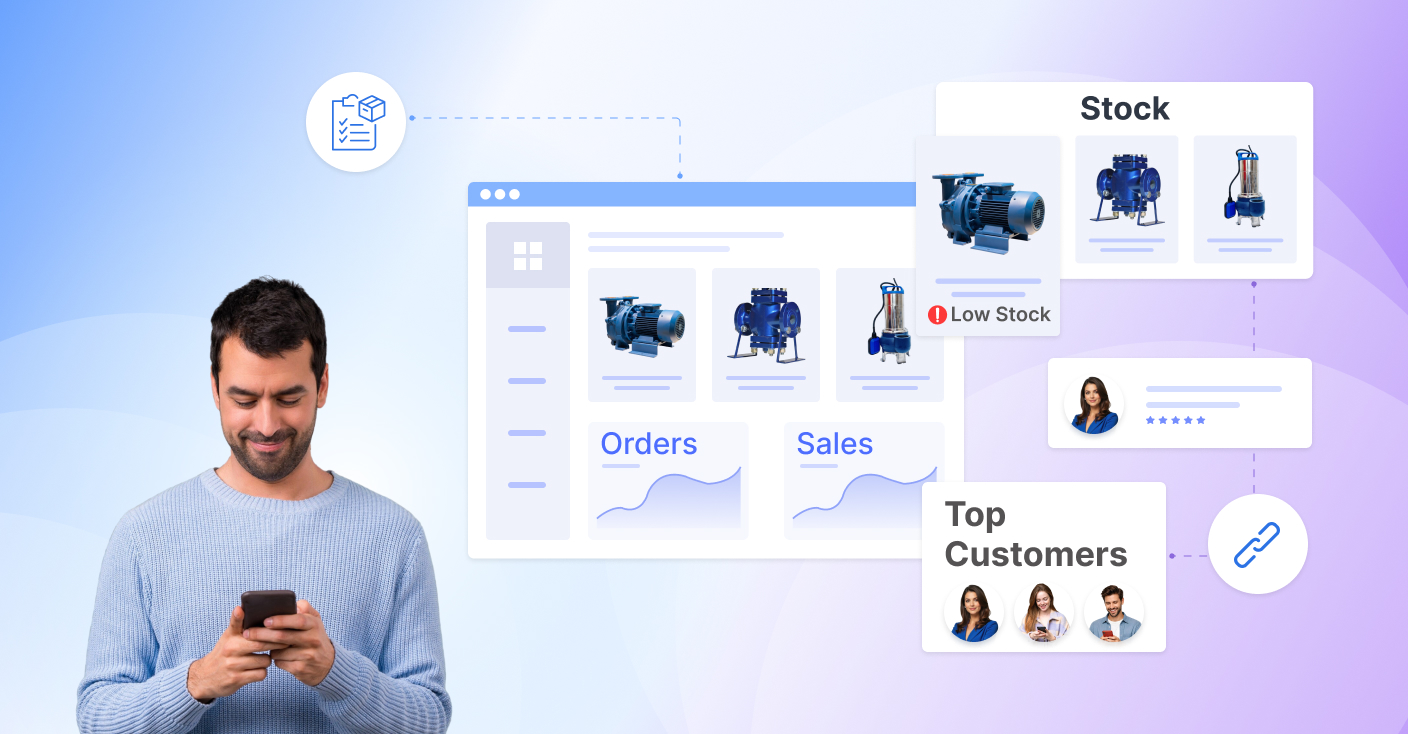
Table of Contents
UK businesses are rapidly investing in the B2B ecommerce to meet evolving digital expectations and stay competitive. However, many organisations still struggle with disconnected systems, where ERP, CRM, and eCommerce platforms operate in silos, slowing down operations and limiting growth.
As a next-generation digital commerce and growth marketing partner, we help UK businesses build scalable B2B website development. One challenge we repeatedly see is that essential business systems exist yet remain disconnected.
This poses a critical challenge: how to unify ERP, CRM, and eCommerce into a connected ecosystem that enables real-time operations, consistent customer experiences, and sustainable growth.
In this blog, we explore how UK businesses can build a future-ready B2B commerce stack through strategic integration and what it takes to make it work in real-world scenarios.
Understanding the Core Challenge in UK B2B Commerce
Many UK B2B organisations especially in manufacturing, wholesale, and distribution, already have ERP, CRM, and eCommerce systems in place. The real issue isn’t adoption; it’s integration.
When systems don’t communicate effectively, businesses face:
- Data silos across departments
- Delayed order processing due to manual intervention
- Inconsistent pricing and inventory visibility across channels
- Fragmented customer experiences
In multi-warehouse or multi-region setups, these gaps become even more critical—leading to operational inefficiencies and missed revenue opportunities.
A future-ready commerce stack solves this by enabling real-time data synchronisation and seamless system communication.
ERP Integration As Backbone
ERP systems manage core operations like inventory, finance, procurement, and order processing. But their real value lies in how well they connect with customer-facing and transactional systems.
In many UK businesses, legacy ERP systems act as isolated data hubs. Without integration, teams rely on manual updates, leading to delays, errors, and limited visibility.
When ERP is fully integrated:
- It becomes a single source of truth across the organisation
- Inventory and order data update in real time
- Financial and operational workflows stay aligned
- Decision-making becomes faster and data-driven
With the right ERP consultancy services, businesses can modernise legacy systems and align them with evolving digital commerce needs without disrupting existing operations.
Building Stronger Customer Connections With CRM
In B2B commerce, relationships drive revenue, but managing them at scale requires more than spreadsheets or disconnected tools.
A well-integrated CRM system enables businesses to:
- Consolidate customer data across touchpoints
- Enable account-based pricing and communication
- Track buying behaviour and engagement patterns
- Align sales, marketing, and support teams
For UK businesses handling complex buyer journeys and long sales cycles, CRM becomes a strategic growth engine, not just a data repository.
When integrated with ERP and eCommerce, CRM ensures every interaction whether online or offline is informed, consistent, and personalised.
The Digital Growth Engine in eCommerce
Your eCommerce platform is no longer just a sales channel, it’s the primary interface between your business and your customers.
Modern B2B buyers expect:
- Account-specific pricing and catalogs
- Bulk ordering and quick reordering
- Self-service portals for order tracking and invoices
- Seamless experiences across devices
This is where many UK businesses face challenges, as they continue to rely on outdated platforms that struggle to support complex B2B requirements.
A future-ready eCommerce platform should:
- Support headless and composable commerce
- Integrate deeply with ERP for real-time inventory and pricing
- Enable personalised buying journeys
- Scale with business growth and market expansion
At Magneto, we help businesses build connected eCommerce ecosystems that go beyond transactions, delivering high-performing platforms designed to drive conversions, strengthen customer relationships, and support long-term growth and scalability.
Turning Systems into a Unified Ecosystem
The real transformation doesn’t come from individual systems, it comes from how they work together.
Integration connects ERP, CRM, and eCommerce into a unified ecosystem where data flows seamlessly across every touchpoint.
This enables:
- Real-time inventory, pricing, and order updates
- Automated workflows across departments
- Accurate and consistent data across all platforms
- Faster, more confident decision-making
For customers, this means accurate product availability, consistent pricing, and reliable delivery timelines, for building trust and improving satisfaction.
The Foundation of a Scalable B2B Commerce Solutions
A high-performing B2B commerce solutions isn’t just built for today, it’s designed to adapt, scale, and evolve with your business. At its core, it brings together flexibility, seamless integration, and a strong focus on customer experience.
To achieve this, businesses need to prioritise:
- A unified data ecosystem that ensures consistency across all systems
- Intelligent automation to reduce manual effort and improve efficiency
- Scalable infrastructure that supports expansion without disruption
- Customer-centric digital experiences tailored to complex B2B journeys
For UK businesses navigating rapid digital transformation, this approach creates a strong foundation for agility, resilience, and sustained competitive advantage in an increasingly connected commerce landscape.
How Magneto IT Solutions Helps UK Businesses
At Magneto IT Solutions, we don’t just implement systems, we solve the underlying challenges of disconnected commerce ecosystems.
With 15+ years of experience and 250+ successful projects, we help UK businesses:
- Seamlessly integrate ERP, CRM, and eCommerce platforms
- Modernise legacy systems without disrupting operations
- Build scalable, high-performance digital commerce solutions
- Automate workflows to improve efficiency and reduce costs
- Deliver unified, customer-centric experiences
Our approach is focused on business outcomes for ensuring every integration drives measurable growth, operational efficiency, and long-term value.
Conclusion
Building a future-ready B2B commerce stack isn’t about adding more tools; it’s about connecting the right systems to work as one.
For UK businesses, the real competitive advantage lies in integration. When ERP, CRM, and eCommerce operate as a unified ecosystem, businesses gain the speed, visibility, and agility needed to scale.
As the UK commerce landscape continues to evolve, the long-term growth opportunity is becoming increasingly significant.
The demand for digital commerce in the UK is forecasted to reach USD 599.5 billion in 2026 and grow to USD 2,668.8 billion by 2036, reflecting a CAGR of 16.1%.
This growth highlights how businesses will increasingly rely on scalable, connected commerce ecosystems to remain competitive and meet evolving customer expectations.
Is your current commerce ecosystem limiting your growth potential? Partner with our digital commerce experts to create a future-ready commerce that streamlines operations, improves visibility, and helps your business scale with confidence.
FAQs
 What is a B2B commerce stack?
A B2B commerce stack is a combination of systems like ERP, CRM, and eCommerce platforms that work together to manage business operations and customer interactions.
Why is integration important for B2B businesses?
Integration ensures seamless data flow, reduces manual errors, and improves efficiency across all business processes.
How does ERP improve business operations?
ERP systems centralise data, automate processes, and provide real-time insights, helping businesses operate more efficiently.
What role does CRM play in B2B commerce?
CRM helps manage customer relationships, personalise interactions, and improve sales and support performance.
How can businesses build a future-ready commerce stack?
By integrating their ERP, CRM, and eCommerce systems and working with experienced partners to ensure scalability and efficiency.