What Is PIM? A Beginner’s Guide to Product Information Management
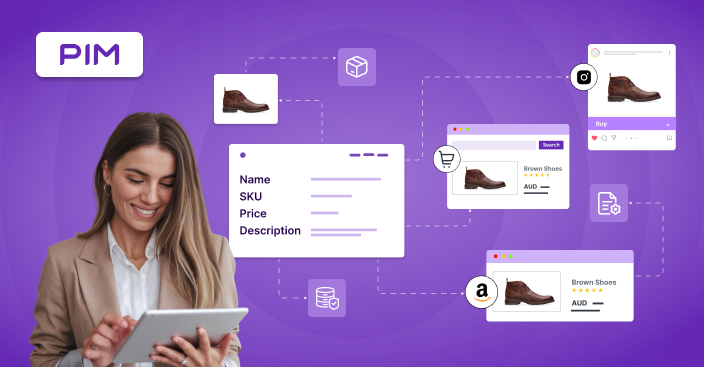
Table of Contents
In today’s fast-paced digital landscape, businesses are no longer confined to a single sales channel. From eCommerce platforms and mobile applications to online marketplaces and social media, product information must remain consistent, accurate, and easily accessible across every touchpoint.
However, managing this ever-expanding volume of product data through manual processes or disconnected systems often results in inefficiencies, inconsistencies, and missed revenue opportunities. This is where a Product Information Management (PIM) solution becomes essential. According to recent analysis, brands implementing PIM achieve an average ROI within 12–18 months.
For UK businesses looking to scale efficiently and deliver seamless customer experiences, investing in a robust PIM implementation is more than just a technological upgrade; it is a strategic move that drives operational efficiency, strengthens customer trust, and supports long-term growth.
In this blog, we’ll walk you through a comprehensive beginner’s guide to understanding Product information management solutions and their business impact.
What Is Product Information Management (PIM)?
Product Information Management (PIM) is a system that stores all your product data in one central place.
Instead of juggling spreadsheets, shared drives, and email threads, your entire team works from a single, reliable source, always accurate, always up to date. This includes everything from product names, descriptions, and prices to images, videos, and marketing content.
Platforms like Pimcore take this even further by combining PIM with Digital Asset Management (DAM) so you manage both your product data and your media files in one place. No switching between tools. No version confusion. Just one platform that keeps every team aligned.
Why Businesses Need a PIM Solution
As product catalogues grow and sales channels multiply, managing product data becomes increasingly complex. Without a structured system in place, businesses often face operational bottlenecks that affect both internal workflows and customer experience.
According to a recent study, brands using PIM experience up to a 35% improvement in operational efficiency. Hence, it simply reveals how important it is to implement this platform for your brands. Let’s explore the key challenges businesses face without PIM.

Challenges Without a PIM Solution
Without a proper PIM system, the same problems keep coming up and they quietly cost your business more than you realise.
Product information becomes inconsistent across platforms. Your website shows one price while a marketplace shows another. Customers notice these discrepancies, and trust is lost. At the same time, every product update has to be done manually, platform by platform, turning what should take hours into something that takes weeks.
Manual data entry also means more mistakes, wrong prices, missing specifications, outdated images. And while your team is busy fixing these errors, they are not focused on growing the business.
How a PIM Solution Transforms Operations
A robust PIM solution eliminates these challenges by centralising all product data into a single system. Updates made in one place are automatically reflected across all connected channels, ensuring consistency and accuracy.
With the support of a trusted PIM implementation partner, businesses can automate workflows, streamline approvals, and significantly reduce the time required to manage product information. This not only improves operational efficiency but also enables faster go-to-market strategies.
Key Features of a Modern PIM System
One Central Hub
All product data lives in one place. Every team from marketing and sales to operations works from the same accurate, up-to-date information. There is no duplication, no confusion, and no conflicting versions.
DAM Integration
A modern PIM system connects with a Digital Asset Management platform, ensuring the right images, videos, and documents are always attached to the right products automatically and without extra effort.
Multi-Channel Distribution
With PIM, you can publish product content to your website, mobile app, Amazon, or any other channel from a single platform. Everything stays consistent, no matter where your customers find you.
Data Enrichment and Localisation
For UK businesses expanding into international markets, localisation is crucial. A PIM system allows businesses to tailor product content for different regions, languages, and cultural preferences.
This capability not only enhances customer relevance but also improves conversion rates in global markets.
Benefits of Implementing a PIM Solution
Improved Data Accuracy and Consistency
A centralised PIM solution ensures that product data is accurate and consistent across all channels. This reduces errors, minimises returns, and builds customer trust.
Faster Time-to-Market
With streamlined workflows and automated processes, businesses can launch new products much faster. A well-executed PIM implementation enables teams to respond quickly to market trends and customer demands.
Enhanced Customer Experience
Customers rely heavily on product information when making purchasing decisions. Accurate, detailed, and well-structured data enhances their experience and increases the likelihood of conversion.
Scalability and Future Growth
As businesses expand their product catalogues and enter new markets, a PIM system scales effortlessly. This makes it a long-term investment that supports sustainable growth.
How to Implement PIM Successfully
Step 1 — Know Your Needs
Start by identifying your biggest data challenges. Understand where time is being wasted, where errors are occurring, and what your long-term business goals look like. This forms the foundation of your entire PIM strategy.
Step 2 — Pick the Right Platform
Choose a system that fits your business today and can grow with you tomorrow. Pimcore is a strong choice, offering a combined PIM and digital asset management solutions within one flexible, scalable platform.
Step 3 — Migrate and Connect
Move your existing product data into the new system and integrate it with your ERP, CRM, and eCommerce platforms. This phase requires careful planning, but getting it right ensures a smooth transition with no data loss.
Step 4 — Keep Improving
PIM is not a one-time project. Reviewing your data regularly, refining your workflows, and continuing to optimise ensures you get the most value from your investment over the long term.

How Magneto IT Solutions Can Help
Taking the first step with PIM is much easier when you have the right partner beside you.
At Magneto IT Solutions, we help UK businesses take full control of their product data. From initial strategy and planning through to full implementation and ongoing support, we are with you at every stage of the journey.
We do not offer generic, off-the-shelf solutions. We take the time to understand your business, your challenges, and your goals then build a PIM implementation that actually solves your problems and delivers measurable results.
Ready to get started? Connect with our PIM specialists today and take the first step towards better product data management.
Conclusion
In an increasingly data-driven world, managing product information efficiently has become a key driver of business success. A well-implemented PIM solution not only simplifies operations but also delivers richer customer experiences and supports long-term growth.
By partnering with a trusted company like Magneto IT Solutions, businesses can maximise the value of their product data and build a future-ready digital ecosystem.
Connect with our PIM specialists to explore tailored solutions, streamline your product data processes, and accelerate your digital commerce growth with confidence.
FAQs
 What is a PIM solution, and how does it work?
A PIM solution centralises product data into one system, allowing businesses to manage, update, and distribute information across multiple channels efficiently.
Is PIM suitable for small businesses?
Yes, even small businesses benefit from PIM as it improves efficiency, reduces manual work, and prepares them for future growth.
What industries benefit most from PIM?
Most of the crucial industries benefit from PIM. Most important among them are retail, manufacturing, wholesale, and eCommerce businesses, as they manage large product catalogues and need a single source for better management.
How does PIM improve SEO and conversions?
By providing consistent, enriched, and keyword-optimised product data, PIM improves search visibility and enhances customer trust, leading to higher conversions.
What is the cost of PIM implementation?
The cost varies depending on business size, complexity, and customisation requirements. Working with a reliable PIM development company helps optimise costs.
Can Pimcore handle both PIM and DAM?
Yes, Pimcore combines PIM and DAM solution capabilities, making it a powerful all-in-one platform.