The Complete Roadmap to Launch and Grow Your Online Grocery Business
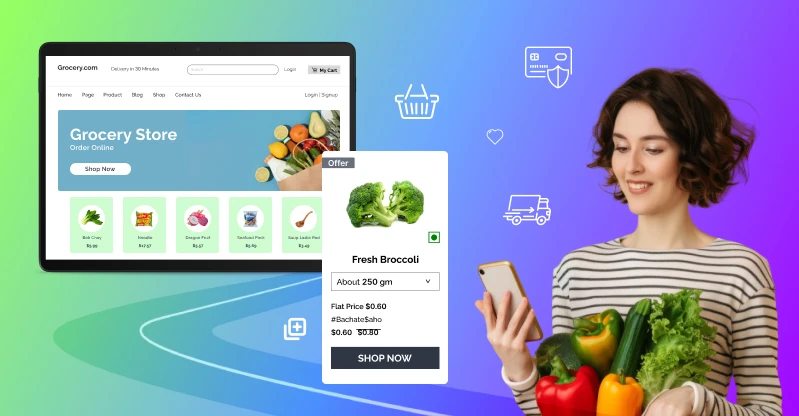
Table of Contents
A grocery ecommerce solution is the digital platform and operating system behind an online grocery store, combining storefront design, inventory management, checkout, payments, and delivery or fulfillment into one scalable setup. For retailers, grocers, and entrepreneurs planning to launch or grow an online grocery business, choosing the right solution directly affects conversion rates, order accuracy, customer retention, and long-term profitability.
The grocery shopping habits of end-users have changed drastically. In the digital age, more and more people prefer to order their groceries online for convenience. This change is driven by the consumer’s preference and comfort of receiving groceries at their doorstep. According to Statista, the global online grocery market is projected to surpass $1.5 trillion by 2026, making online grocery commerce a competitive priority rather than an optional sales channel.
This guide focuses on the core decisions that shape a successful grocery ecommerce solution: responsive store design, real-time inventory management, friction-free checkout, delivery workflows, personalization, SEO and marketing, pricing strategy, and the practical steps required to launch and scale. With the right strategy and technology, retailers can enter this growing market with a stronger customer experience, better operational control, and a clearer path to revenue growth.

Explore the Essential Elements For A Successful Grocery Store Launch
Responsive Design
When launching an online grocery store, it’s important to understand the key importance of responsive design in shaping the online shopping experience. The store design should be easy-to-use and intuitive to ensure a seamless experience for the end-users.
The grocery store’s website and applications should be user-friendly to ensure customers are aligned with the brand and can easily make their final purchase. A user-friendly search experience boosts conversion rates significantly and strengthens the online shopping experience.
The website should contain high-quality product images, seamless mobile applications, and webpages to make sure the store is running appropriately and that there are no excessive scrolling or page loading issues.
Efficient Inventory Management
Inventory management is a critical factor for an online grocery store, and efficient inventory management should include real time inventory management for a grocery ecommerce platform. It comes with many requirements, including tracking every item’s quantity, value, and location by using a barcode to manage inventory accurately across the online store and control all the grocery store inventory.
This process is helpful for managing the over- and understock issue and saves time and money by better managing the stock. It prevents order disappointments and reduces order inaccuracies in grocery ecommerce.
Streamlined Checkout Process
Many retailers struggle to complete online purchases, which is often caused by a complicated checkout process.
Therefore, it is critical to simplify the checkout process, as In 2025, 88% of consumers reported that they would abandon their cart if the checkout process is too long or complicated. 77% of online shopping carts are abandoned before payment. Furthermore,70% prefer a one-click or guest checkout option for grocery shopping.
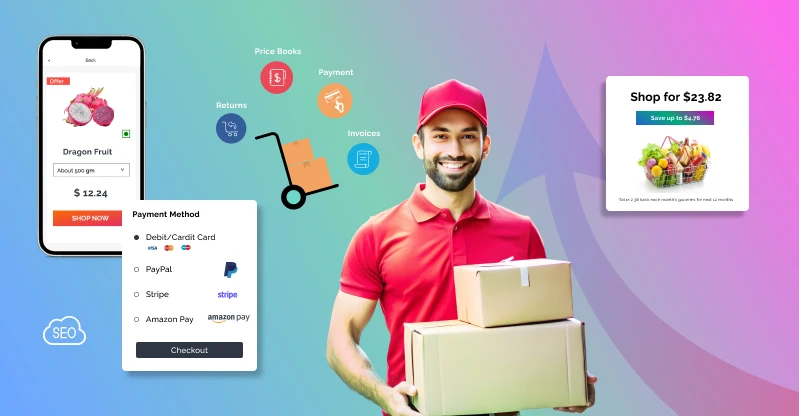
The checkout process needs to be transparent, simple to navigate, and built around secure payment options and reliable payment processing to make sure users can complete their orders without any hurdles. Adding a guest checkout process can also be useful for simplifying the purchase process with ease.
Effective Delivery and Fulfilment Solutions
Delivering groceries at the appropriate time and location is the most important component. To maintain simplicity and hassle-free operations, efficient order fulfillment should support home delivery services, curbside pickup, and other delivery services.
As of 2025, nearly 74%** of online grocery buyers** prefer same-day or next-day delivery options. Consumers are demanding real-time delivery tracking, and over 65% say that fast delivery influences brand loyalty. Curbside pickup is used by 60% of US households and is expected to capture 50% of the eGrocery market by 2027.
Therefore, simplifying the delivery process is important to guarantee the best possible experience for end users. Using picker apps, which enable effective order picking and packing while reducing errors and expediting the process, is one efficient strategy.
Buy online, pick up in-store can reduce shipping costs and strengthen in store convenience. Streamlining the fulfilment process and managing logistics with technology can ensure on-time and accurate deliveries, while micro-fulfillment centers improve last mile delivery efficiency and the end-user experience.
Implement Advanced Solutions
To guarantee that end users have a simple and enjoyable experience, advanced digital solutions must be implemented. Enhancing store performance requires strong integrations with features like product search functionality, advanced filters, and search algorithms.
Targeting additional consumers and promoting repeat business can both be achieved by implementing loyalty programs with data-driven capabilities that improve customer engagement. Digital coupons and personalized rewards based on past purchases support repeat purchases. Increasing customer loyalty by 5% can boost profitability by 75%.
Consumer Behaviour Analysis
Another crucial component of the grocery business is behavior analysis, including understanding customer behavior to interpret customer data and respond to evolving customer expectations. To ensure that you use data-driven tools to better understand your customers, personalization support is necessary. This will enable you to provide the final customer with excellent customer service and support.
Recall that customers have much less time to spend with you; if they are dissatisfied with what you have to offer, they will go straight to your rival’s store. Therefore, in order to comprehend user pain points and create the best solutions for them, comprehensive research is necessary.
In 2025, brands that use AI-driven personalization saw a 92%** increase in conversion rates** and a 35% boost in average order value. Consumers are increasingly expecting personalized recommendations, especially for perishable goods.
Thus, retailers can also use customer data to tailor recommendations around past purchases and customer preferences, creating a seamless shopping experience that makes customers happy.
SEO and Paid Marketing for Grocery Ecommerce
Using SEO and Paid marketing is very important for improving the store’s visibility and performance and reaching the right customers. These tools will help the retailer connect effectively with their targeted customers through tailored marketing strategies across key online channels.
With effective SEO and Paid marketing efforts, retailers can optimize their grocery ecommerce website with relevant tags, keywords, headings, and meta tags to improve search ranking, support online shopping, and deliver a stronger online experience for the most appropriate customers.
Competitive Pricing and Offers
Competitive pricing and offers are essential in grocery eCommerce. Online grocery store pricing varies significantly and is influenced by several factors.
The grocery industry responds to marketing trends influencing competitive pricing and demand for close price monitoring. Therefore, a promotional pricing strategy is critical for attracting and retaining customers. Multiple payment options and clear pricing also help increase sales volume.
Additionally, dynamic pricing and value-based pricing are also essential, as they utilize advanced algorithms to adjust prices in real-time based on various factors and determine prices based on customer-perceived value.
This approach focuses on appealing to customer sensibilities by offering lower prices and more flexible delivery options.
In 2025, 82%** of online grocery shoppers** compare prices across multiple platforms before making a purchase. Offering real-time deals, bundle pricing, and subscription discounts for staples like pet food significantly improves conversion and customer retention.

Steps to Launch an Online Grocery Store
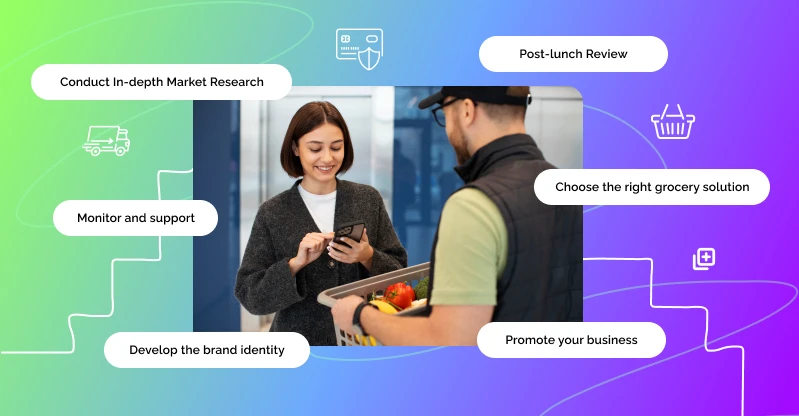
Conduct In-depth Market Research
Before developing a grocery store, conduct extensive market research. This includes analyzing the current market, researching competitors, and determining their strengths and customer base. You can develop a unique offering that appeals to your target audience by examining what makes them successful.
Choose The Right Grocery Solution
Once the market research is complete, we will choose the right grocery ecommerce solution aligned with the project’s needs. A grocery e-commerce store can be created with various platforms.
However, it needs to be scalable, secure, and effective. Some popular e-commerce platforms are Shopify, Magento, Adobe Commerce, and many more to build a grocery store with better sales growth. The right platform must support variable-weight and weighted product handling for items like produce.
According to Gartner’s eCommerce Report 2025, Shopify and Adobe Commerce are the most preferred platforms for launching online grocery stores due to their scalability, omnichannel capabilities, and support for multiple stores when needed. 40% of grocery retailers switched to headless CMS platforms in 2024–25 for better speed and customization.
Develop The Brand Identity
After selecting the right solutions, it’s time to create a brand identity. This is a major requirement for grocery online businesses.
It needs to be associated with a unique business tone, voice, and design to connect with the right customers, which will also improve visibility and create a unique selling approach.
Promote Your Business
Once the brand identity is created, the business needs to be promoted for better visibility and reach. This process can be done by using effective digital marketing techniques such as SEO, Email campaigns, social media marketing, PPC ads, and lots more to connect with new customers with better reach and discount opportunities.
Monitor and Support
Once the promotion process is done, it’s time to monitor the progress of your grocery store with dedicated support during ongoing monitoring and maintenance. This process needs to be done by analyzing and testing the store performance for ensuring the store is performing effectively and seamlessly.
Post-launch Review
After the monitoring is done, it’s time to check the grocery eCommerce store’s post-launch review, monitor customer experience, and fix issues with real-time support to maintain performance.
In 2025, 67% of online grocery businesses use real-time performance analytics tools and AI-driven dashboards to monitor post-launch success metrics like user retention, delivery time, and customer satisfaction, while reviewing online orders and online shopping capabilities as they scale.
Conclusion
Launching a successful online grocery store in 2025 requires more than just stocking virtual shelves; it demands innovation, customer-centric design, and a better online grocery shopping experience.
With the online grocery sector projected to cross $1.5 trillion by 2026, there’s no better time to tap into this booming market. From using AI-powered personalization and dynamic pricing to investing in responsive UX and delivery logistics, every step must be data-driven, with modern technology helping retailers meet customer expectations across sales channels.
Collaborate with experienced grocery eCommerce experts who understand the evolving digital landscape and consumer behavior to ensure your store doesn’t just launch, but thrives.
FAQs
 Is starting an online grocery store profitable in 2025?
Yes. The online grocery market is expected to cross $1.5 trillion by 2026, and more than 60% of shoppers already buy groceries online every week. With the right setup, promotions, and delivery system, it can be very profitable.
What do I need first to start an online grocery store?
The first step is to research the market and your competitors. Then, choose a reliable eCommerce platform like Shopify or Adobe Commerce, set up your product inventory, and build a user-friendly website or app.
How important is delivery speed for online grocery stores?
Very important. In 2025, around 74% of buyers expect same-day or next-day delivery. Customers also want real-time tracking, so investing in fast and accurate delivery solutions is key.
How can I make sure customers don’t abandon their cart?
Keep the checkout process simple. Offer one-click checkout or a guest checkout option. Complicated or long checkouts lead to abandoned carts.


