Bringing AI-Powered Intelligence to Automotive Commerce | Meet Magneto IT Solutions at AAPEX 2026 | The Venetian Expo, Las Vegas | November 3–5 | Booth V835
Experience D2C-first strategies to drive measurable results.
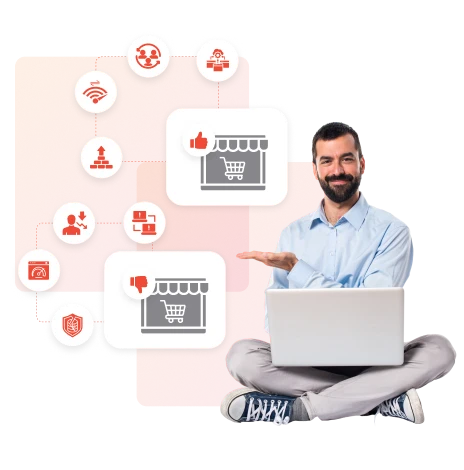
A website may be launched by anyone, but a profitable D2C channel requires the proper framework from the beginning.
Due to low conversion rates, sluggish storefront performance, checkout difficulties, and growing acquisition expenses, many firms draw customers yet lose money.
Growth slows, data breaks, and errors rise when commerce, ERP, CRM, and fulfilment systems aren't in sync.
In the absence of lifecycle planning, subscriptions, and loyalty programs, margins decrease and repeat business remains low.
To achieve scalable and predictable D2C outcomes, our Build–Grow–Scale methodology links technology, operations, and growth.
We help manufacturers launch stable D2C channels and gain predictable revenue control.
 Immediate Concerns Of Manufacturers
 Fast go-to-market without disrupting distributor agreements
A subscription-ready infrastructure (where applicable)
Product and content control without engineering bottlenecks
ERP, 3PL, CRM, and PIM integrations planned upfront
Requirement for accurate inventory, tax, and fulfillment sync
Secure, high-converting checkout
Performance optimized for paid traffic spikes
 Manufacturers’ Long-Term Vision, Backed by Our Expertise
 Direct access to customer data and cohort insights
Improved gross margin via pricing flexibility and bundles
Reduced reliance on Amazon and retail intermediaries
Repeat purchase systems and subscription stability
Stronger brand storytelling and education layers
Channel expansion across SEO, paid, email, and social
Clean data for forecasting and operational planning
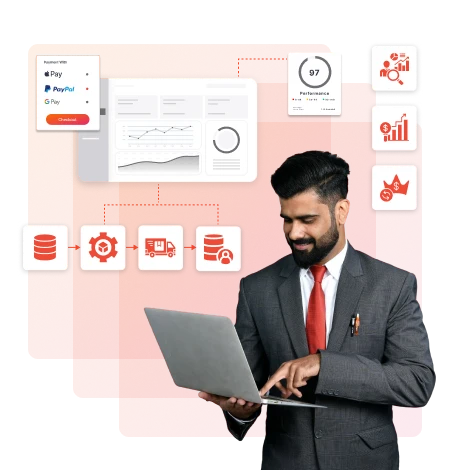 Technology Platform Assessments
 We evaluate your product model, SKU complexity, subscriptions, integrations, and growth plans to recommend a D2C foundation built for long-term scalability and operational fit.
D2C Store Development We deliver D2C store for consumers finding your brand outside of retail channels, to inform, elucidate value, and expedite the purchasing process.
Subscription-Ready D2C We create secure, high-performance D2C stores based on conversion funnels, retention systems, and recurring purchase models.
System Integration We design and automate ERP, CRM, PIM, OMS, to ensure inventories, orders, and customer data are completely synchronized and dependable.
Support & Monitoring We offer proactive monitoring, performance optimization, and organized support management to ensure your D2C channel remains stable throughout traffic surges and seasonal demand.
Customer Experience Management We use first-party data to create organized retention tactics such as lifecycle journeys, reward schemes, subscription optimization, and CRO strategies.
Conversion-Focused Checkout We guarantee checkout processes that convert well, such as safe payments, personalized shipping, and complete support for promos, bundles, and subscriptions.
Replatforming We upgrade legacy or app-heavy D2C infrastructures to allow for SKU growth, foreign expansion, deeper integrations, and subscription scaling.
Growth & Performance Marketing Through a combination of margin-focused optimization, data-led innovation, and performance acquisition, we provide sustained D2C growth.
Retention & Lifecycle Marketing Our structured retention and lifecycle methods harness first-party customer data to boost lifetime value, subscription duration, and repeat business.
Performance & Tracking We implement end-to-end analytics and tracking frameworks that deliver full-funnel visibility across acquisition, conversion, and retention, enabling data-driven decisions at scale.
We’re a trusted digital commerce growth innovator, collaborating with brands to make them future-ready.





















Marketing Lead at Silhouette America
Heritage Parts Centre
Operational Manager at Combipower

Petzone, Group Marketing & Ecommerce Manager

Badkamermeudel Outlet, Owner
Marketing Manager at Diamond Boutique

Owner at V P Wedding Planner

President of Diyi Technology

Shoptroniks, LLC

Marketing Analyst at Glazers Wholesale Distributors

Director of eCommerce - Catrion

Job Recruitment Portal

Owner at GBI Varpo

CEO at GoGrads

Marketing Admin at Chandrana Supermarket

IT Head at Ashrafs Baharin

Director of HCP Marketing at Enterra Medical
Helping manufacturers grow sustainable, high-margin D2C businesses.
Our trusted ecommerce platform ecosystem for D2C brands


We are your strategic partner for scalable, margin-focused D2C growth.

We go beyond launching storefronts, helping manufacturers shift from distributor-led sales to owned, data-driven D2C revenue models.

Our D2C eCommerce solutions are perfect for increasing subscription retention, enhancing repeat business, and granting price control to boost profitability.

More than 200+ D2C brands across the region choose us for their unique needs, including integration, complex store handling, and launches.

Our structure is made for D2C systems for boosting conversion, retention, and reducing reliance on the marketplace for long-term benefits.
We go beyond launching storefronts, helping manufacturers shift from distributor-led sales to owned, data-driven D2C revenue models.
Our D2C eCommerce solutions are perfect for increasing subscription retention, enhancing repeat business, and granting price control to boost profitability.
More than 200+ D2C brands across the region choose us for their unique needs, including integration, complex store handling, and launches.
Our structure is made for D2C systems for boosting conversion, retention, and reducing reliance on the marketplace for long-term benefits.
Tailored eCommerce experiences for diverse industry needs

We help to empower jewellery brands with stunning, high-performing online stores that boost engagement and sales.

As a trusted grocery tech partner, we help retailers build scalable, efficient online platforms to streamline operations & customer loyalty.

We create responsive, user-friendly furniture eCommerce stores that enhance shopping experiences and conversions.

We digitise manufacturing operations with powerful eCommerce solutions that simplify workflows and accelerate growth.

We enable distributors to build efficient online platforms that simplify order management and drive reach.
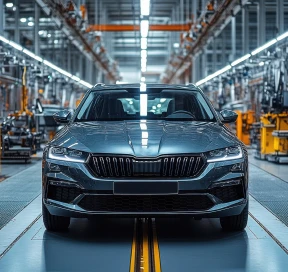
We help automotive brands create high-performing online stores that showcase products and accelerate sales.

Our fashion eCommerce solutions deliver visually stunning, responsive stores to captivate shoppers.

We empower health brands with secure, user-friendly online stores that streamline product access.

We build fast, feature-rich electronics stores that provide seamless shopping experiences and drive higher sales.

Our eCommerce solutions for stone and construction materials help businesses showcase products effectively.

We create beautiful, responsive online stores for florists, making it easy to browse, order, and delight customers.

We help petcare brands build engaging, user-friendly stores that drive loyalty and boost product sales.
Let us help you find the answers to all of your common questions
What features should a D2C eCommerce website have? The basics, fast load times, a mobile experience that actually works, checkout that doesn't lose people halfway through. Beyond that, personalisation tools that use real customer data rather than broad assumptions. Subscription or loyalty mechanics if repeat purchase is part of the model. And analytics that show what's actually happening, not just what looks good in a report. The features that matter most depend on the business, but those are the ones worth getting right first.
Can D2C eCommerce websites integrate with ERP and CRM systems? Yes, and for most serious D2C operations, those integrations aren't optional. ERP keeps inventory, orders, and fulfillment connected. CRM ensures customer data is actually used rather than just collected. Done right, the whole thing runs as one system rather than three separate tools that barely talk to each other. Platform choice matters here; Shopify, Magento, and headless setups all handle these integrations, but the complexity varies depending on what's already in place.
What are the benefits of D2C eCommerce development? Control - that's the one word that covers most of it. Control over how the brand looks, how customers experience it, how data gets used, and where the margin actually goes. But it goes deeper than that. D2C builds customer relationships that compound over time. Repeat purchases happen because the brand earned them, not because a marketplace algorithm happened to show the right product on the right day.
Why should brands choose D2C eCommerce? Marketplaces hand you an audience, but they keep everything that actually matters. The customer data. The relationship. The margin. D2C cuts through that. Brands talk directly to their customers, learn from every interaction, and build something that genuinely belongs to them. No platform sitting in the middle. No commission quietly eats into every sale. Just the brand and the customer, and everything that grows from that connection.
How can D2C eCommerce increase sales? It starts with something marketplaces never hand over - direct access to real customer data. With that, personalisation stops being generic. Retention strategies have something solid to work with. Pricing decisions get made on actual buying behaviour rather than assumptions. And the margin recovered from cutting out the middleman? That goes straight back into growth, which compounds in ways marketplace selling simply doesn't allow.
How long does it take to build a D2C eCommerce website? Shorter than some expect. Longer than some agencies quote. A clean Shopify build four to six weeks is realistic. Custom Magento or headless? Three to six months, sometimes more. But here's the thing - it's rarely the actual build that stretches timelines. It's unclear requirements, decisions that get made too late, and integrations that turn out messier than anyone anticipated upfront.
Which platforms are best for D2C eCommerce development? Depends entirely on what the business actually needs, and that's worth being honest about before picking anything. Shopify is the go-to when speed and ease of management matter most. Adobe Commerce (Magento) earns its place when customisation requirements go deeper than a standard setup can handle. BigCommerce sits usefully between the two. And if complete frontend freedom is the priority, headless commerce is worth a serious conversation before ruling it out.
Why should brands choose D2C eCommerce over marketplaces? Marketplaces won't tell you this upfront. Every sale you make through them is a customer they own, not you. The data stays with the platform. So does the relationship. D2C flips that completely. Brands sell directly, keep the data that actually matters, and build loyalty and repeat revenue without anyone sitting in the middle taking a cut.
Do you work with early-stage D2C brands? Yes. We support brands from launch to scale with flexible engagement models, from the initial MVP builds to final phased rollouts.
Can you help migrate from marketplaces to D2C? Yes. We specialize in marketplace-to-D2C transitions with minimal disruption, protecting existing revenue while building owned channels.
How can a manufacturer launch D2C without disrupting distributors? Through pricing segmentation, exclusive D2C-only bundles, controlled assortments, and phased rollout strategies that avoid channel conflict.
Which platform is best for subscription-based D2C? It depends on SKU complexity, subscription logic, integrations, and growth targets. We assess the structure first before recommending Shopify or Adobe Commerce.
Can D2C integrate with existing ERP and fulfilment systems? Yes. We design integration architectures for real-time inventory sync, automated order flows, and clean customer data across ERP and fulfilment systems.
Do you handle growth marketing after launch? Yes. Growth strategy, CRO, retention, and lifecycle marketing are core parts of our long-term D2C framework.
How do brands safely reduce Amazon dependency? By building owned traffic channels, strengthening retention systems, and increasing customer lifetime value, D2C becomes a predictable revenue.
What timeline should we expect for a D2C launch? Most structured D2C builds launch within 6–12 weeks, depending on integrations, subscriptions, and operational complexity.
Start your journey of discovery, where each article promotes growth and unlocks your true potential.

When business and technology leaders discuss AI in Commerce, the conversation often focuses on individual tools and use cases, from AI-powered search and recommendations to automated marketing and customer service. But AI maturity goes beyond adopting individual solutions. It reflects how effectively businesses use AI across customer experiences, business decisions, and commerce operations. As customer […]
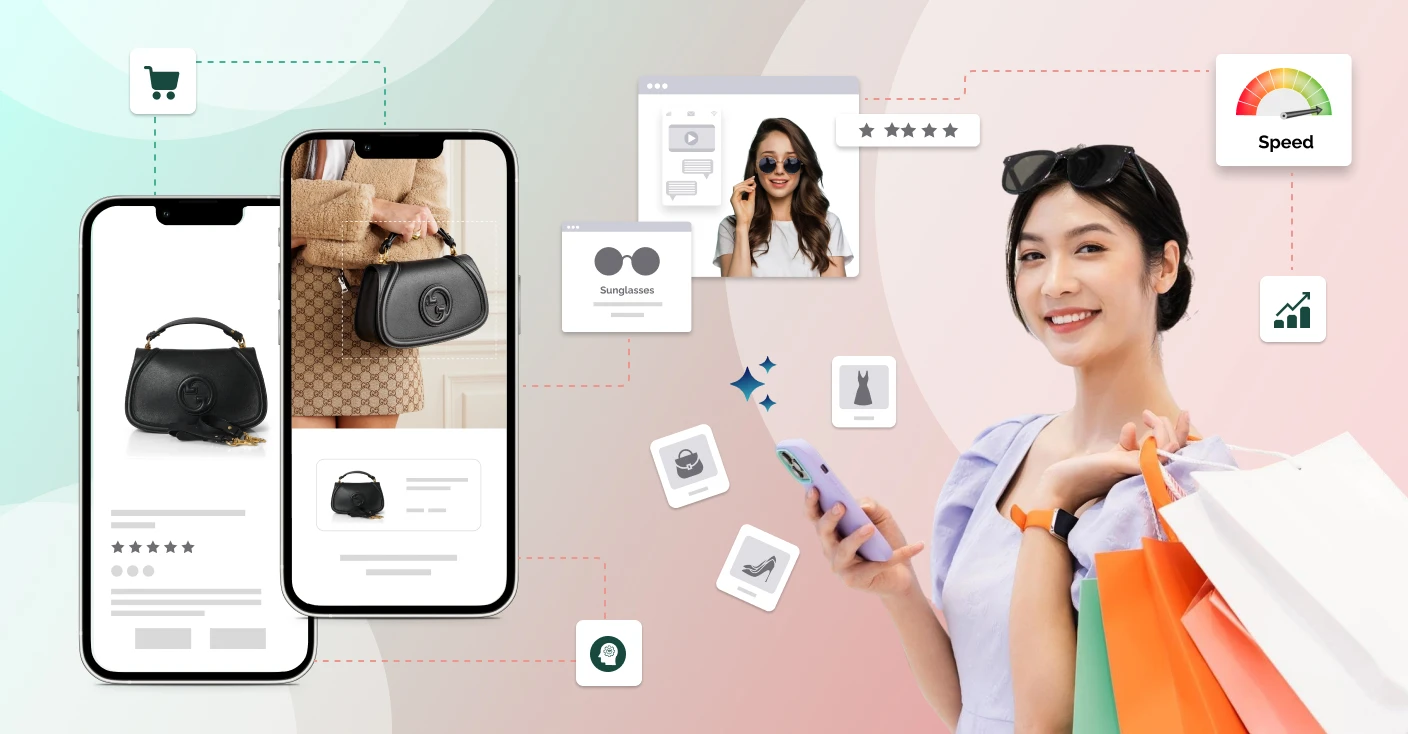
We are living in a time when having an online presence is not just a good thing, it is necessary. The luxury fashion brand Gucci is doing a job of combining artificial intelligence with online shopping. For a time people thought that shopping had to be done in person. Now things have changed and we […]
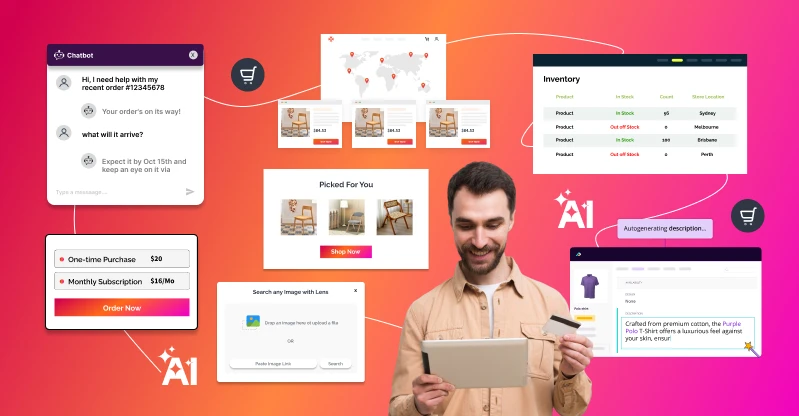
Artificial Intelligence (AI) is no longer a vision for the future but a building block in eCommerce evolution. From operational efficiency to hyper-personalized buying, AI is transforming the entire model of online commerce. Over 37% of consumers shop more often due to AI-based product suggestions, citing the immediate impact of AI on sales and customer […]
Your needs and questions are important; let’s develop the best solutions together.
Smart, adaptable, and customer-focused eCommerce services built for every business model
Let's Build Your Success Together!








Stores Launched
Daily Transactions Managed
Product Management Experience
Languages Managed