B2B Customer Journey Mapping: Key Stages and Best Practices
Table of Contents
A b2b ecommerce agency helps B2B brands plan, build, and optimize digital commerce systems around their business goals, from ecommerce strategy and b2b ecommerce website to integrations, UX, and ongoing growth. For many businesses, customer journey mapping is where that work starts, because B2B buying paths involve longer cycles, multiple decision-makers, and more complex business needs than a typical B2C purchase.
For mid-sized to enterprise brands in retail, manufacturing, wholesale/distribution, and D2C, understanding the B2B customer journey is essential to modernizing or scaling a b2b ecommerce website development that improves revenue growth, self-service, and operational efficiency. This guide explains the key stages, touchpoints, and best practices in the B2B customer journey, including customer experience strategy, AI-driven personalization, and digital self-service, so teams can make better platform, content, and sales decisions in 2025–26 and stay competitive in a digital-first market.
What is the B2B customer journey map?
The several phases that consumers take while interacting with a firm, from first contact to purchase, are depicted in a business-to-business (B2B) customer journey map. It is employed to examine consumer behavior and pinpoint areas where the customer experience needs to be enhanced. Every stage of the customer journey and all of the customer’s interactions with the company, including those via the internet, email, phone, and in-person meetings, are usually included in the map.
In 2025–26, the B2B customer journey is shaped by digital-first behaviors. Buyers are highly informed and independent. According to a recent Gartner study, 81% of B2B buyers self-educate, 85% build shortlists independently, and 80% of interactions are digital. This shift means B2B brands must proactively optimize all digital and physical touchpoints.
The client’s first interaction with the company usually marks the beginning of the customer journey map. For B2B businesses, many teams use journey mapping to align the ecommerce model with business goals, business needs, and the wider business model across key digital channels. This might start through email, an ecommerce website, an ecommerce site, an online store, or another channel connected to the core ecommerce platform and future online sales. Understanding the stages, examples, and touchpoints helps shape planning for a B2B ecommerce website and supports revenue growth. B2B journeys often involve multiple decision makers, which is why end-to-end optimization matters. Following the consumer’s choice, the journey map tracks their contacts with the company, including post-purchase follow-up, customer service exchanges, and other touchpoints, reflecting how B2B eCommerce agencies provide end-to-end services to optimize business buying online.
Importance of B2B Customer Journey Map for Customer Experience
A customer journey map is important for any business, particularly those operating in the B2B (business-to-business) space. This map provides a comprehensive view of the customer experience, allowing companies to identify areas of improvement, make better decisions, support revenue growth, and ultimately drive more revenue.
The customer journey map provides a visual representation of the customer experience throughout the entire process. It starts with the initial contact, whether it’s through an advertisement, a referral, or any other source, and tracks the customer’s progress through every interaction across digital channels and the online store as part of the broader ecommerce platform experience. By mapping out each step in the customer’s journey, businesses can understand where they are succeeding, protect customer satisfaction, and find opportunities to streamline operations.
The customer journey map also serves as a valuable tool for customer segmentation. By tracking customer behavior, companies can create more effective B2B marketing campaigns, target specific customer segments, and personalize customer service. This helps build stronger customer relationships, enables the sales team to respond with more relevant outreach, and supports smooth operations across marketing and service touchpoints. Recent market signals reinforce this need: 83% of B2B buyers expect their online purchasing to grow, while 45% are dissatisfied with their current online purchasing experience.
Finally, the customer journey map helps businesses identify areas of potential growth. By tracking customer behavior, companies can identify patterns and trends that can be used to develop strategies for expansion and improve business operations. For example, suppose a company notices that a certain segment of customers is often returning for subsequent purchases. In that case, it may be worthwhile for the company to invest in additional products or services for that segment.
A B2B customer buying journey map is invaluable for any business. It provides an insightful view of the customer experience, allowing businesses to make better decisions, target specific customer segments, and identify the opportunities where rapid growth of b2b eCommerce stands within an ecommerce website or online store shaped by the company’s business model.
Types of B2B customer journey maps
We have mentioned five different customer journey maps. But always remember that there isn’t any fixed map for all businesses. We have to make our own journey according to our goals and approach. So let’s have a look at them
Current State
B2B customer journey maps visualize and analyze customer interactions across stages of the purchase process. They provide insights into customer behavior and preferences for better targeting. This map also gives you an idea of what customers think about your business.
Day In The Life
This map outlines the various stages of the customer journey from initial contact to purchase and beyond. Evaluating the current state should also cover how account management works for existing business customers across current systems, including access to self service tools and order history. This map focuses on every aspect of the customer and tries to find the pain points of business buyers in order to fulfill their requirements that even they don’t know. Accurate decisions also depend on whether B2B platforms integrate cleanly with ERP and CRM systems.
Future State
This customer journey map focuses on what customers will do in the future of B2B eCommerce instead of the present and thus creates possibilities for new products and experiences. It helps uncover how business buyers and business customers navigate routine tasks, from vendor research to repeat purchasing. Recent studies reveal that 78% of buyers evaluate just three vendors, and 71% select the first vendor they assess. This emphasizes the need for B2B companies to position themselves strongly at the very start of the journey. B2B platforms should also support quick order and reorder flows with self service portals, including access to order history.
Blueprint
This map starts with one of the above maps and afterward incorporates the individuals, procedures, and innovations essential to get the experience mapped, often planning for self service portals as part of the next-stage experience. In B2B environments, corporate accounts often involve multiple decision makers, so the blueprint also accounts for multi-user company accounts, approval flows, and purchase orders. Finally, it explains everything that needs to be done. 71% of B2B companies are redesigning customer interactions by 2026.
Tactical
In contrast to the more extensive journey mapping of the first four examples, tactical mapping concentrates on one touchpoint or a few. This approach is especially advantageous when there is a known area of difficulty that needs to be improved. The blueprint maps the people, processes, innovations, and key features needed at that touchpoint, including how corporate accounts and multi user company accounts will work in practice.
B2B journeys often involve multiple decision makers and purchase orders, so agencies often design multi-buyer approval workflows and multi-user account structures.
Essential Checklist for Crafting a B2B Customer Journey Map
Today’s B2B buyers expect hyper-personalized experiences, digital self-service, and real-time responses throughout their journey. Tactical maps are often used to improve one conversion step or touchpoint because conversion rate optimization is crucial for B2B sales processes, and the review may narrow in on the essential features tied to that issue. Modern customer journey mapping must incorporate AI tools, digital behavior analytics, and instant support touchpoints to support selecting the right ecommerce platform and provide a seamless experience.
1. Set up customer journey map
Before creating a B2B customer journey map, it is important to research and analyze the customer journey. This includes understanding the customer’s overall experience with the company, their interactions with various departments and channels, and any B2B touchpoints or pain points along the way. This checklist helps teams identify essential features before choosing the right ecommerce platform for their journey requirements. It also helps align business objectives early and shape a practical ecommerce strategy for setup, scaling, and operations.
2. Identify customer journey stages
The customer journey can be divided into various stages, such as awareness, consideration, purchase, and post-purchase. Setup should begin with clear business objectives and an ecommerce strategy. In B2B, these stages often involve multiple decision makers, which affects how information, approvals, and interactions should be mapped. Each stage should be detailed, including the customer’s motivations and needs at each point, and agencies often support this as part of end-to-end optimization of business buying online.
3. Identify customer touchpoints
The customer journey map should identify all the points at which a customer interacts with the company. This could include website visits, emails, phone calls, face-to-face meetings, and social media interactions across social media platforms. In B2B journeys, there are often multiple decision makers, and purchase stages may involve negotiated pricing and contract terms.
4. Describe customer journey actions
For each touchpoint, it is important to describe the customer’s actions and reactions. This could include anything from clicking a link, leaving a review on LinkedIn or X, engaging with your brand on YouTube, or making a purchase through bulk ordering.
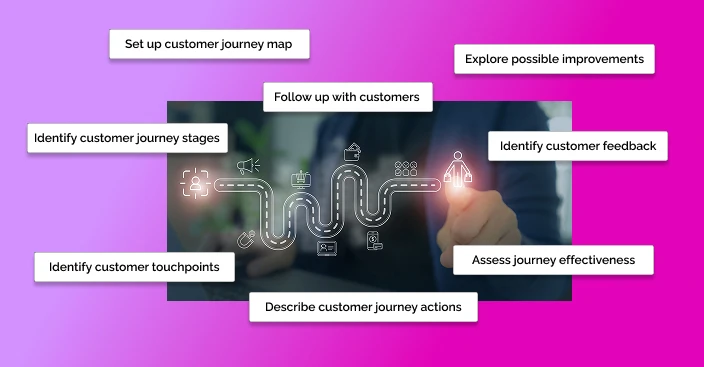
5. Assess journey effectiveness
By taking into account the customer’s actions and reactions, including bulk ordering behavior, it is possible to assess the effectiveness of the customer journey at each stage, especially on B2B platforms that often need to support minimum order quantities. This can help to identify any areas that need improvement, including issues affecting Core Web Vitals and the need for strong Core Web Vitals.
6. Identify customer feedback
Customer feedback is one of the most important customer journey elements. This could come from surveys, social media comments, or customer service interactions. This feedback should be used to shape the customer journey and refine offers for each customer segment. Journey effectiveness should also be reviewed through performance signals such as Core Web Vitals, since strong Core Web Vitals support faster, lower-friction B2B experiences.
7. Explore possible improvements
Once the customer journey has been mapped out and assessed, it is possible to explore ways to improve it. This could involve tweaking the customer journey stages, introducing new touchpoints, choosing the right platform, or making other changes to enhance the customer experience. Feedback should also be analyzed by customer segment, especially since 45% of B2B buyers are dissatisfied with their online purchasing experience.
8. Follow up with customers
It is important to follow up with customers after they have gone through the customer journey. This could involve sending out a survey or follow-up email, or simply thanking them for their business. This also helps strengthen relationships with existing customers. Some improvements depend on choosing the right platform, and API-first integration allows seamless connection of multiple systems more effectively.
B2B customer journey mapping – Benefit for Customers
In the era of AI-driven B2B commerce, mapping the customer journey not only enhances clarity but also unlocks predictive insights and automated personalization opportunities, making every interaction smarter and more efficient.
B2B customer journey mapping is a potent tool for customers, taking the guesswork out of engaging with a business. By mapping out the customer journey, companies can identify potential pain points, design self service tools around common tasks, improve customer experience, and ensure that each journey step is as efficient and enjoyable as possible.
Additionally, it allows customers to understand their journey and anticipate the next steps, resulting in a more streamlined, seamless experience. Not only does this help customers feel taken care of and appreciated, but it also helps businesses retain existing customers and encourage repeat engagement through more relevant follow-up.
B2B customer journey mapping – Benefit for Sellers
For sellers, customer journey mapping provides invaluable insights into consumer behavior and buying patterns. By understanding their customers’ journey, B2B sellers can identify opportunities for improvement, refine their sales strategies, and streamline operations. When self-service tools include real-time inventory visibility for trust and quick order or reorder capabilities, customers can move faster and sellers can support more efficient online sales. With journey mapping, sellers can identify and address customer pain points, develop better-personalized customer experiences, and drive greater engagement with their products and services.
Additionally, B2B customer journey mapping can help sellers better understand customer preferences and tailor their approach accordingly. Using customer journey mapping for B2B sales, sellers can gain a competitive edge, increase loyalty, and drive more revenue.
Possible pitfalls of B2B customer journey mapping
Customer journey mapping is important for businesses to understand their customers’ needs and develop strategies to meet those needs better. It also helps sellers reduce operational complexity, streamline internal processes, and support more efficient online sales. Agencies use these insights to implement complex pricing and catalog management and optimize platforms for complex multi-tier pricing structures. However, it is not without its pitfalls. There are three key areas when mapping customer journeys: senior executive support, insufficient data, and dedication to client-focused strategies.
Senior Executive Support
Senior executives must be on board with customer journey mapping initiatives to succeed, especially since poorly designed journeys often increase operational complexity rather than reducing it. Without the support of senior executives, the process can be derailed by other priorities or a lack of resources, including gaps in alignment with the sales team. In addition, senior executives must understand the value of customer journey mapping and be willing to dedicate time and resources to the process.
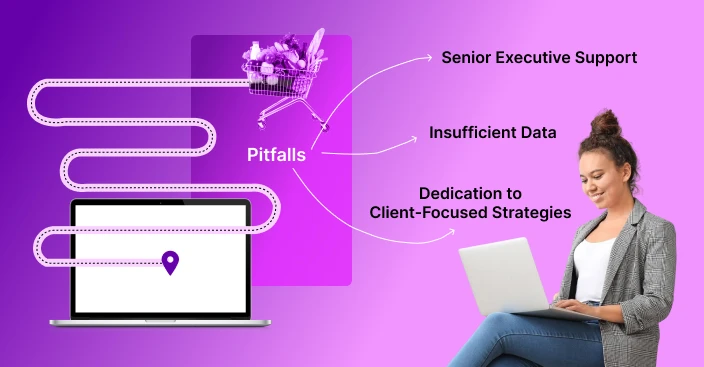
Insufficient Data
In 2025, beyond traditional surveys and CRM data, businesses must also capture AI-interpreted customer signals, intent data, and multi-touch digital engagement data to create effective maps. That visibility also supports seamless integration between journey insights and existing systems used across sales, service, and operations. Executive sponsorship is especially important when journey changes affect the sales team and related workflows.
Dedication to Client-Focused Strategies
Finally, customer journey mapping is only as effective as the strategies that come out of it and how well they align with your business goals, business needs, and existing systems. In order to create a successful client-focused strategy, businesses must dedicate significant time and resources to the process. This includes a thorough analysis of the customer data and the creation of an actionable plan of attack. Teams should choose a platform that integrates with ERP and CRM systems, because CRM integration helps manage long sales cycles in B2B. Customer journey mapping can waste time and resources without a commitment to client-focused strategies.
Creating a B2B Customer Journey Map: A Step-by-Step Guide
A B2B customer journey map is different for every business and requires extensive research. You must understand your business model, your potential customers, and what they like and what they don’t. The more you research customer profiles, data, insights, and touchpoints, the better opportunities you will get. That includes how buyers from manufacturers, distributors, retailers, and other businesses move through evaluation and purchasing. It should also shape the right ecommerce platform and the way buyers access products or services online.
According to a study by McKinsey & Company, 99% of B2B buyers claim they will make a purchase in an end-to-end digital self-serve model, with the vast majority very comfortable spending $50K or more online. Additionally, 77% of B2B leaders now say digital commerce experiences are critical to success. Digital tools like AI chatbots, guided selling platforms, and smart recommendations are becoming standard in B2B journeys, so our commitment is to build strategies around clear business needs and business goals.
Client profiles and multiple decision makers
Creating a client profile for a B2B customer journey mapping process is essential in understanding the customer’s needs and wants. It involves creating a customer profile that includes their demographics, preferences, buying habits, and other important data. The right ecommerce platform also depends on the company’s business model and whether it sells services online, products, or both to other businesses. B2B models may include supplier-oriented commerce common among manufacturers, buyer-oriented private procurement portals, marketplaces connecting multiple suppliers and buyers on one platform, or subscription-based arrangements that support predictable revenue streams. This data can create a customer journey map, which will help the company better target its products and services for business buyers.
Companies can better tailor their strategies and services to meet their needs by thoroughly understanding the customer. Creating a client profile can ensure that the customer experience is tailored to their specific needs and wants, including account structures and customer specific pricing, and help create a better experience for business customers overall.
Data-driven personas
After having an idea about the client profile, you’ll have to look at their personality, like what they prefer and what frustrates them. These profiles should clearly distinguish each customer segment across different business buyers and business customers, including where personalized pricing and pricing structures may vary. This step will prepare you for future marketing strategies and campaigns. You can gather the data from various sources, such as surveys, feedback, support email, and others. These profiles also show where custom pricing rules are needed for different buyer accounts.
Stages in the process
The B2B customer journey map is an important tool for guiding customers through each stage of the buying process. It outlines the stages of the journey, from initial awareness of a product or service to making a purchase and creating an after-sale relationship. Persona work often reveals that different customer segments need different buying paths, approval steps, and account experiences.
1. Awareness – When a customer first becomes aware of your product or service and begins researching it. At this stage, customers will be researching your company, your product or service, and any competitors they may have. Recent data shows 81% of B2B buyers self-research extensively before interacting with sales teams, making it essential for companies to offer high-quality digital content upfront.
2. Consideration – When a customer has done their research and is now weighing up their options before making a purchase. They will look for additional information, such as customer reviews, product features, and pricing. With 78% of buyers narrowing choices to just three vendors, B2B brands must strategically present their differentiation early and often.
3. Purchase – This is when the customer has decided to purchase your product or service and is ready to complete the transaction. Customers expect a fast, smooth, and secure checkout process at this stage. B2B buyers now demand automated, instant, and self-serve purchase experiences. Companies excelling here report significantly faster deal closures. This stage often includes purchase orders, contract pricing, and flexible payment options tied into approval flows and back-office systems.
4. After-Sales Support – This is when the customer has received their product or service and is now using it. At this stage, customers will be looking for continued support and guidance from your company, such as additional product information, customer service, and technical support. The goal is to build a lasting relationship with the customer so they become loyal and recommend your product or service to others. Additionally 86% of B2B customers are willing to pay more for superior post-sale support and experience, making this stage a critical loyalty driver. These insights help shape personalized pricing, custom pricing, and the complex pricing structures the platform must support.
Touchpoints
Customer Touchpoints are key moments in the customer journey where customers interact with a business. In a B2B environment, customer touchpoints are the various points at which a customer interacts with the business, such as during sales meetings, online chats, website visits, and conversations with sales reps. By mapping out these touchpoints, companies can better understand how customers move through the journey, identify areas of improvement, and optimize their customer experience.
The journey map should include all stages of the customer journey, from initial contact to post-sales follow-up, and can be used to identify opportunities for improvement. In the purchase stage, B2B transactions often include negotiated pricing and contract terms. Workflows may also include purchase orders, contract pricing, and flexible payment options. Additionally, it can help identify areas where customers may face challenges, allowing the business to address them quickly and efficiently. Finally, by mapping out customer touchpoints, businesses can ensure a positive customer experience that leads to customer loyalty and increased sales. Moreover in In 2025, digital touchpoints dominate, but leading companies are combining AI-powered tools like automated chatbots and predictive alerts alongside human interactions to provide contextual and personalized support.
Opportunities
A B2B customer journey map is used to visualize and analyze a customer’s journey from initial contact with a business to the desired outcome across digital channels and interactions with sales reps. It is a valuable asset for understanding customers’ motivations, needs, and goals and identifying improvement areas in the customer experience.
By filling in perceptions and opportunities, B2B customer journey maps provide valuable insights into customer behavior, enabling businesses to create more effective strategies for engaging with customers and improving their overall experience. With comprehensive data on customer interactions, businesses can create a more comprehensive view of their customer journey and identify opportunities for improvement, including how account management, corporate accounts, and custom catalogs should be structured to support B2B buying flows. Many B2B companies now use AI-powered opportunity scoring to automatically identify high-potential accounts based on journey behavior, enabling smarter targeting.
Customer journey maps – B2B Vs. B2C
B2B and B2C customer journey maps are useful tools for understanding customer behavior, but their differences are significant. For example, B2B customer journey maps focus on the relationship between a business and another business, while B2C customer journey maps focus on the relationship between a business and an individual customer.
B2B customer journey maps are typically more complex, involving multiple stakeholders, decision-makers, and other parties. In contrast, B2C customer journey maps tend to be simpler and more focused on the customer’s individual experience. Additionally, B2B customer journey maps often require more data and insights, as the customer’s experience will be affected by how their interactions with other stakeholders influence their decisions. In B2B, the journey also increasingly involves AI-assisted buying, complex approval chains, and automated decision triggers, while B2C continues to focus more on individual behavior and impulse-driven personalization.
Opportunity mapping often highlights gaps in account management, support for corporate accounts, or custom catalogs across the buying journey. It also helps agencies prioritize pricing structures through complex pricing and catalog management improvements.

Conclusion
Understanding the fundamentals of business-to-business (B2B) customer journey mapping is essential for businesses to gain deeper insights into customer behavior, preferences, buying patterns, and needs. It helps in creating a better customer experience and identifying opportunities for improvement. By mapping out the customer journey, businesses can identify the stages, examples, and touchpoints that are most important for their B2B customers. This information can be used to tailor the customer experience, develop better strategies, and drive more sales.
B2B journeys are also more complex because they often involve corporate accounts, multiple stakeholders, and ongoing account management needs across the buying cycle. Choosing the right ecommerce platform matters here because B2B platforms should support multi-user account structures and pricing models shaped by negotiated pricing and contract terms. As we enter 2025–26, the B2B customer journey is no longer linear or manual, it is automated, predictive, and hyper-personalized. Companies that embrace AI, digital self-service, and data-driven personalization will lead the next wave of customer-centric success.
FAQs
 What is a B2B customer journey map?
It is the process of visualising and comprehending how business customers connect with your brand, from awareness to post-purchase.
Why is customer journey mapping so crucial in B2B?
It assists in identifying pain areas, improving touchpoints, and providing a better customer experience.
What are the main stages of the B2B customer journey?
Common stages are awareness, contemplation, choice, purchase, and post-purchase engagement.
How is B2B journey mapping different from B2C?
B2B journeys are typically longer, include numerous stakeholders, and necessitate more personalised, relationship-based interactions.
What are the best practices for B2B customer journey mapping?
Involve sales and marketing departments, employ data-driven insights, and keep the map updated based on customer input.


