Digital Asset Management Shaping the Future of Jewelry and Diamonds
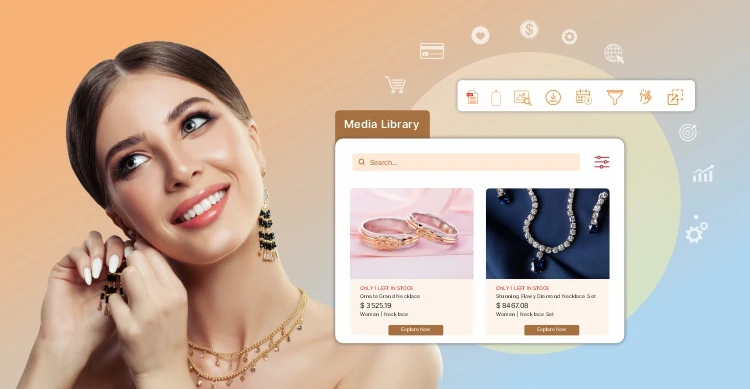
Table of Contents
The jewelry and diamond business is an industry that epitomizes elegance, luxury, and attention to detail. In today’s digital era, businesses in this industry face new challenges and opportunities. One tool that has gained significant importance is Digital Asset Management (DAM).
The worldwide market for Digital Asset Management (DAM) is projected to achieve a value of approximately USD 8.159 billion by the year 2030, experiencing a compound annual growth rate (CAGR) of 18% from 2022 to 2030.
Digital Asset Management (DAM) is crucial for the jewelry and diamond industry in the modern age. This industry relies on beautiful visuals, excellent craftsmanship, and consistent branding. DAM helps businesses organize, access, and protect their high-quality media assets, such as images and videos.
By efficiently tracking and categorizing these assets, time is saved, and mistakes from manual processes are minimized.
It Improves customer satisfaction in the jewelry and diamond industry by offering visually engaging product exploration, customized catalogs, and effective customer service. By adopting DAM, this industry can enhance its operations, establish a more substantial brand presence, and succeed in the digital world.
This blog will explore how media asset management enhances productivity, brand consistency, customer experience, and other essential aspects of the jewelry and diamond business.
Companies can unlock their true potential and thrive in the digital landscape by maintaining a comprehensive and organized digital asset library.
Maximize your Potential with Powerful DAM Solutions
Optimizing productivity and efficiency is crucial in the fast-paced world of jewelry and diamond businesses. DAM offers a range of features and digital asset management tools that streamline media inventory management, automate metadata tagging, and facilitate seamless collaboration among various stakeholders.
Automated metadata tagging is another crucial feature of DAM that improves efficiency. It eliminates the need for manual data entry and reduces the risk of errors. Seamless collaboration is essential for jewelry and diamond businesses that involve multiple stakeholders, such as designers, photographers, and marketers.

DAM systems provide a centralized platform for asset sharing, version control, and task assignment. It enables smooth communication, enhances collaboration, and improves overall workflow management.
Efficient design inventory management is essential to track and categorize jewelry and diamond assets accurately.
With the help of media asset management tools, businesses can organize their design inventory, track stock levels, and quickly identify specific items. It saves time and reduces errors associated with manual inventory management processes.
Ensuring Brand Consistency with DAM

Maintaining a consistent brand image is paramount in the jewelry and diamond business. DAM ensures brand consistency by providing a centralized storage and access solution for all brand assets.
Brands that maintain consistent branding across channels experience an average 23% boost in revenue. DAM ensures this consistency by centralizing control over visual and marketing assets.
Digital asset management platforms offer several benefits to businesses in terms of brand consistency. Storing brand assets in a DAM system, including logos, brand guidelines, digital catalog, product images, and marketing materials, ensures easy management and distribution across various channels.
It guarantees all stakeholders access to the most up-to-date and approved assets, supports secure sharing of up-to-date content with external partners, and eliminates the risk of using outdated or inconsistent brand elements.
DAM also helps in maintaining version control and managing asset usage rights. With digital asset management tools, businesses can track the rights associated with each asset through digital rights management, ensuring that they are used within authorized contexts and preventing unauthorized publishing or usage. It plays a vital role in protecting brand integrity and intellectual property rights.
Enhancing the Customer Experience through DAM

Delivering exceptional customer experiences is a top priority for jewelry and diamond businesses. Digital asset management for ecommerce can help businesses improve product presentation, personalization, and customer service.
Visual product exploration is taken to new heights with the help of DAM. High-quality images, videos, and 360-degree views of jewelry and diamond products can be showcased, allowing customers to engage with the products more immersively.
It helps create a solid emotional connection with the products and increases the likelihood of a purchase. In fact, over 75% of online shoppers say that high-quality product images strongly influence their purchasing decisions. DAM helps deliver these visuals consistently, elevating engagement and conversions.
Digital asset management best practices are instrumental in optimizing the customer experience. By utilizing media asset management tools and strategies, businesses can ensure that their assets, digital content, and media content are well-organized, tagged with relevant metadata, and easily accessible to customers. It improves the overall browsing and shopping experience, helping customers and teams locate assets faster and making it easier for customers to find desired products.

DAM also supports personalization and customization in the jewelry and diamond industry. By leveraging DAM, businesses can offer personalized product catalogs, allowing customers to customize jewelry pieces by selecting different gemstones, settings, or engraving options.
This level of personalization enhances the customer experience and fosters a stronger connection between customers and the brand.
In addition to visual exploration and personalization, DAM plays a vital role in improving customer service. With a well-organized and comprehensive DAM system, businesses can quickly access product information, specifications, digital files, and media files when responding to customer inquiries.
It enables customer service representatives to provide accurate and timely responses, improving customer satisfaction.
Developing a Successful DAM Strategy
Implementing a successful Digital Asset Management (DAM) strategy is crucial for jewelry and diamond businesses to leverage the full potential of their digital assets and drive business growth. A strong strategy should cover the full asset lifecycle, from creation and approval to distribution and reuse. A well-defined and thoughtfully executed strategy can streamline operations, improve efficiency, and strengthen governance, distribution workflows, and content management processes to ensure a consistent brand experience across channels. Explore the key considerations and best practices for developing a successful DAM strategy.
Assess Current State and Define Objectives
Before embarking on a DAM implementation, assess the state of asset management. Evaluate existing processes, workflows, and pain points to identify improvement areas.
This assessment will serve as the foundation for your DAM strategy. Typical objectives include improving workflow efficiency, enabling seamless collaboration, enhancing brand consistency, and delivering exceptional customer experiences.
Engage a Media Asset Management Consultant
Engaging a digital asset management consultant can be valuable in developing and executing a DAM strategy. Consultants bring expertise and industry knowledge, helping businesses navigate the complexities of DAM implementation. A digital asset manager often oversees the digital asset management library during adoption and ongoing governance, and in larger organizations dam managers in this role commonly bring 1–3 years of experience in DAM-related operations.
They can assess business needs, recommend suitable DAM platforms, and guide best practices. Working with a consultant ensures that the digital asset management strategy is tailored to the unique requirements of the jewelry and diamond industry.
Select the Right DAM Platform
Choosing the right DAM platform is crucial for the success of your strategy. Consider factors such as scalability, integration capabilities with content management systems, Product Information Management platforms, and enterprise systems, along with user interface and security features, when evaluating DAM solutions.
Look for platforms that offer robust metadata management, strong search capabilities, advanced search capabilities, version control, and asset usage rights management.
A digital asset management system or digital asset management software should also support APIs for custom integrations and asset distribution across connected tools. Adobe Experience Manager Assets is a strong enterprise option, with integration into Creative Cloud applications, while Acquia DAM integrates deeply with the Drupal CMS.
Cloud-based media asset management tools provide scalability and flexibility, allowing businesses to adapt to changing needs and accommodate future growth.
Establish Metadata Standards
Metadata plays a vital role in organizing and categorizing digital assets, and strong asset organization is what makes metadata so important for reliable retrieval and governance. Establishing consistent metadata standards is essential for efficient asset discovery and retrieval.
Define a standardized metadata schema with naming conventions, taxonomy management, keywords, and categories relevant to the jewelry and diamond industry. Train employees on metadata usage to ensure consistent tagging and accurate asset representation.
Regularly review and refine the metadata structure based on user feedback and evolving business needs, with managing metadata treated as an ongoing discipline that improves findability as the library grows.
Ensure Data Security and Privacy
As jewelry and diamond businesses deal with sensitive customer and product information, data security and privacy are paramount. Choose a DAM platform that prioritizes data security measures such as encryption, access control, user permissions, and regular security audits.
Ensure regulatory compliance with relevant privacy regulations, such as GDPR or CCPA, by maintaining approval history, permissions, and controlled asset usage. Implement robust data backup procedures, disaster recovery plans, and access management practices to safeguard sensitive assets from loss or damage.
Collaborate and Communicate Across Departments
DAM implementation requires collaboration and communication across departments. Involve stakeholders from different teams, such as marketing teams, design, sales, and IT, in the DAM strategy development process. Creative teams also benefit from shared workflows that reduce version confusion and speed approvals. This alignment is especially valuable for marketing operations that rely on consistent, reusable content.
Gain insights into their unique requirements and workflows, including creative operations, to ensure that the DAM system supports review, approval, and handoff processes. Regularly communicate the benefits of media asset management and provide updates on its implementation progress. DAM can also improve project management by giving teams shared visibility into assets and related tasks.
Encourage feedback and suggestions to foster a sense of ownership and engagement among employees. Centralized collaboration makes it easier to share assets, connect with other enterprise systems, and can save organizations 20–30% of time on asset-related tasks.
Continuous Evaluation and Optimization
A DAM strategy is not a one-time effort but an ongoing process of optimizing asset libraries as content volumes grow. Continuously evaluate the effectiveness of the DAM system, measure user adoption rates, and analyze asset performance to improve operational efficiency. Gather user feedback to identify areas for improvement and address any challenges. Review and optimize metadata structures, workflows, and processes to maximize the benefits of digital asset initiatives.
Key Challenges
By embracing the power of DAM, jewelry and diamond businesses can unlock their true potential, optimize productivity, maintain brand integrity, and exceed customer expectations in the dynamic digital landscape.
However, it’s essential to acknowledge that implementing DAM in the jewelry and diamond business may have specific challenges. Let’s explore some of these challenges and provide recommendations to overcome them.
Data Security and Privacy Considerations
Protecting sensitive customer and product information should be a top priority. Encryption, access controls, and regular security audits are necessary to safeguard data from unauthorized access or breaches.
Working with a DAM platform that prioritizes data security and compliance with privacy regulations such as GDPR or CCPA is essential.
Integration with Existing Systems
Integrating DAM with existing systems, such as inventory management or e-commerce platforms, can be complex.
Choosing a DAM solution that offers robust integration capabilities is essential, especially when DAM software needs to connect with other enterprise systems through APIs and support seamless exchange of rich media across e-commerce, CMS, PIM, and related tools. Collaborating with experienced DAM consultants or working closely with the DAM provider can help overcome integration challenges.
Metadata Standardization
Establishing consistent metadata practices is crucial for efficient asset categorization and retrieval. Creating a standardized metadata schema and training employees on its usage can ensure accurate tagging when uploading assets into a centralized repository and facilitate asset discovery.
Regularly reviewing and refining the metadata structure based on user feedback and evolving business needs is also essential, with centralized asset storage providing the foundation for reliable metadata practices.
User Adoption and Training
It’s essential to provide comprehensive training to employees to maximize the benefits of DAM. It includes educating them about the features and benefits of the DAM system so they can manage digital content more effectively, teaching them how to search and retrieve assets effectively while distributing digital files and publishing assets through approved workflows, and promoting a culture of asset management and organization.
Offering ongoing support and regular training updates can help foster user adoption and ensure the long-term success of the DAM implementation.
Scalability and Future Growth
As the jewelry and diamond business evolves, the DAM system should be scalable to accommodate growing volumes of digital content, expanding creative asset collections, and broader business needs.
Choosing a DAM solution that offers scalability options, such as cloud-based storage or flexible licensing models, allows businesses to reuse approved assets at scale for reduced production costs and adapt to changing requirements without disruptions. Regularly evaluating the scalability of the DAM system and planning for future growth is essential.
Conclusion
In conclusion, Digital Asset Management platforms (DAM) have emerged as a game-changer for the jewelry and diamond business, revolutionizing how assets are managed, shared, and utilized in the digital landscape, while also strengthening content management across teams and systems.
By embracing DAM, companies can unlock opportunities and gain a competitive edge in this ever-evolving industry.
DAM offers many benefits, including enhanced productivity, streamlined processes, brand consistency, and improved customer experiences.
Through streamlined inventory management, businesses can efficiently track and categorize their jewelry and diamond assets, helping streamline content management processes, streamline workflows, and reduce manual effort.
Automated metadata tagging ensures consistent and accurate asset information, enabling efficient search and retrieval, while seamless collaboration among stakeholders fosters creativity, accelerates workflows, and brings products to market faster.
Centralized storage and access provided by media asset management platforms ensure that all brand assets, including logos, product images, marketing materials, and audio files, are stored in a secure centralized repository.
It facilitates brand consistency, supports brand management, and helps teams maintain brand consistency and ensure brand consistency across digital channels.
Version control and asset usage rights management further safeguard the brand’s integrity and protect intellectual property rights.
Moreover, DAM empowers businesses to enhance the customer experience by offering visually immersive product exploration, personalized catalogs, and efficient customer service.
High-quality images, videos, and 360-degree views enable customers to engage with products more profoundly, fostering emotional connections and increasing the likelihood of purchasing.
Personalized catalogs allow customers to customize jewelry pieces, creating a sense of exclusivity and individuality.
Additionally, DAM facilitates quick access to product information and relevant marketing materials, empowering customer service representatives to respond promptly and accurately to inquiries, ultimately leading to heightened customer satisfaction.
While implementing DAM may come with challenges, such as data security considerations, metadata standardization, and user adoption, these can be overcome with careful planning, collaboration with DAM consultants, and continuous evaluation.
By addressing these challenges head-on, businesses can ensure the successful implementation and utilization of DAM systems, positioning themselves for growth, scalability, and future success.
In this digital age, where the visual appeal and seamless experiences drive customer engagement, DAM catalyzes success in the jewelry and diamond business.
It enables enterprises to unleash their creativity, capture the essence of their brand, and create a lasting impression on customers.
By harnessing the power of DAM, jewelry and diamond businesses can elevate their operations, strengthen their brand presence, and embark on a transformative journey toward digital excellence. Connect with a DAM expert to ensure excellence.
FAQs
 What is Digital Asset Management (DAM) in simple terms?
Digital Asset Management (DAM) is a system that helps businesses store, organize, manage, and share digital files like photos, videos, catalogs, and marketing materials. For the jewelry and diamond industry, it ensures all product images, designs, and brand assets are easy to find and use.
Why is DAM important for the jewelry and diamond industry?
Jewelry and diamond businesses rely heavily on visuals and branding. DAM helps them keep all their product photos, catalogs, and marketing files organized, consistent, and secure. It saves time, reduces errors, and improves the customer experience.
How does DAM improve customer experience?
With DAM, businesses can showcase high-quality images, 360° product views, and even personalized catalogs. This allows customers to explore jewelry pieces in detail, customize designs, and get better service because staff can quickly access product information.
Can DAM help maintain brand consistency?
Yes. DAM stores all logos, product images, and marketing materials in one place. This ensures that only approved, up-to-date files are used across websites, social media, and campaigns, keeping the brand consistent everywhere.
Is DAM secure for storing sensitive data?
Modern DAM platforms have strong security features like encryption, access controls, and regular audits. This ensures customer and product data stays safe and complies with privacy regulations